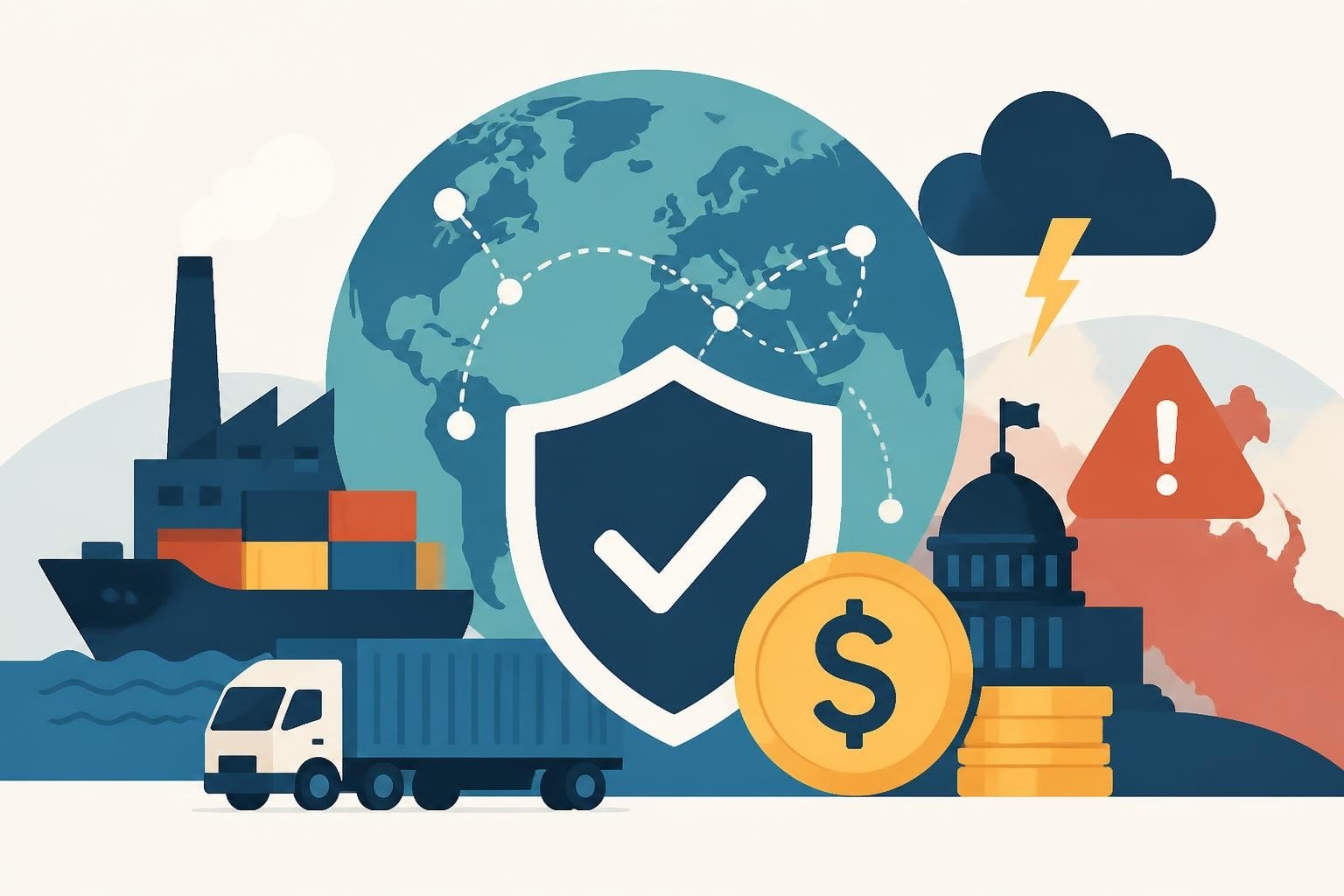
Modern businesses face unprecedented complexity in their supply chains, where a single disruption can cascade through entire operations, threatening liquidity, operational continuity, and stakeholder confidence. For organizations in sectors like gold trading, commodity finance, and manufacturing, understanding and implementing robust supply chain risk solutions has become essential to maintaining financial stability. The interconnected nature of global commerce means that supply chain vulnerabilities directly impact balance sheets, working capital requirements, and the ability to meet obligations to lenders and customers alike.
Understanding Supply Chain Risk in Financial Context
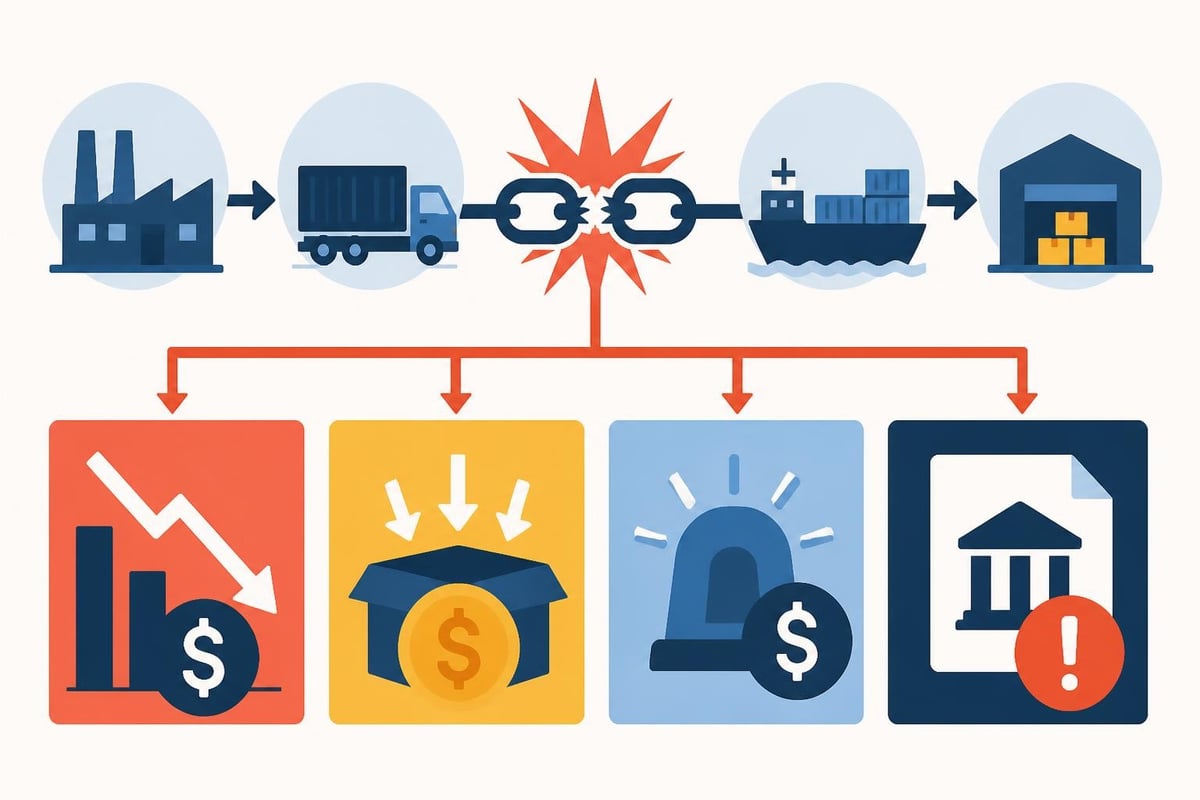
Supply chain risk extends far beyond operational inconvenience. It represents a direct threat to financial performance, capital allocation efficiency, and organizational resilience. When suppliers fail, commodity prices spike, or logistics networks collapse, the immediate impact appears in cash flow disruptions, inventory write-downs, and emergency financing needs.
Financial advisors and corporate finance professionals must recognize that supply chain exposures create both direct and indirect financial consequences. Direct impacts include revenue loss from production stoppages, expedited shipping costs, and penalty payments for missed deliveries. Indirect consequences affect reputation, customer relationships, and market valuation.
Key Categories of Supply Chain Risk
Organizations face multiple categories of supply chain vulnerability, each requiring distinct mitigation approaches:
- Supplier concentration risk when excessive dependence on single sources creates failure points
- Geopolitical disruption from trade restrictions, sanctions, or regional instability
- Commodity price volatility affecting input costs and margin predictability
- Transportation and logistics failures disrupting material flows
- Quality and compliance issues triggering recalls or regulatory action
- Cybersecurity threats compromising supply chain data and systems
- Natural disasters and climate events damaging infrastructure or production capacity
The gold industry exemplifies these challenges. Mining operations depend on specialized equipment suppliers, processing facilities require consistent energy access, and international trade faces regulatory complexity. Marketplace risk in precious metals markets adds another layer of volatility that compounds supply chain uncertainties.
Building Comprehensive Supply Chain Risk Solutions
Effective supply chain risk solutions require systematic approaches that integrate financial planning, operational monitoring, and strategic decision-making. Organizations cannot eliminate all supply chain risks, but they can build frameworks that detect threats early, respond effectively, and maintain financial resilience through disruptions.
Risk Identification and Assessment Framework
The foundation of any risk solution begins with comprehensive identification and assessment. This process maps the entire supply network, identifies critical dependencies, and evaluates each node's vulnerability and potential impact.
| Risk Assessment Dimension | Evaluation Criteria | Financial Impact Metric |
|---|---|---|
| Supplier Criticality | Alternative source availability | Revenue at risk |
| Geographic Concentration | Regional exposure percentage | Disruption cost exposure |
| Commodity Dependence | Price volatility range | Margin sensitivity |
| Lead Time Vulnerability | Buffer stock requirements | Working capital impact |
Organizations should conduct regular business risk assessments that specifically address supply chain dimensions. These assessments must translate operational risks into financial terms that boards and lenders understand.
Modern technology platforms enable more sophisticated risk identification. AI-powered risk management solutions leverage machine learning to assess supply chain risks early in product lifecycles, offering part-level insights that enhance overall resilience. These tools analyze thousands of data points to identify vulnerabilities that manual reviews might miss.
Financial Modeling for Supply Chain Disruptions
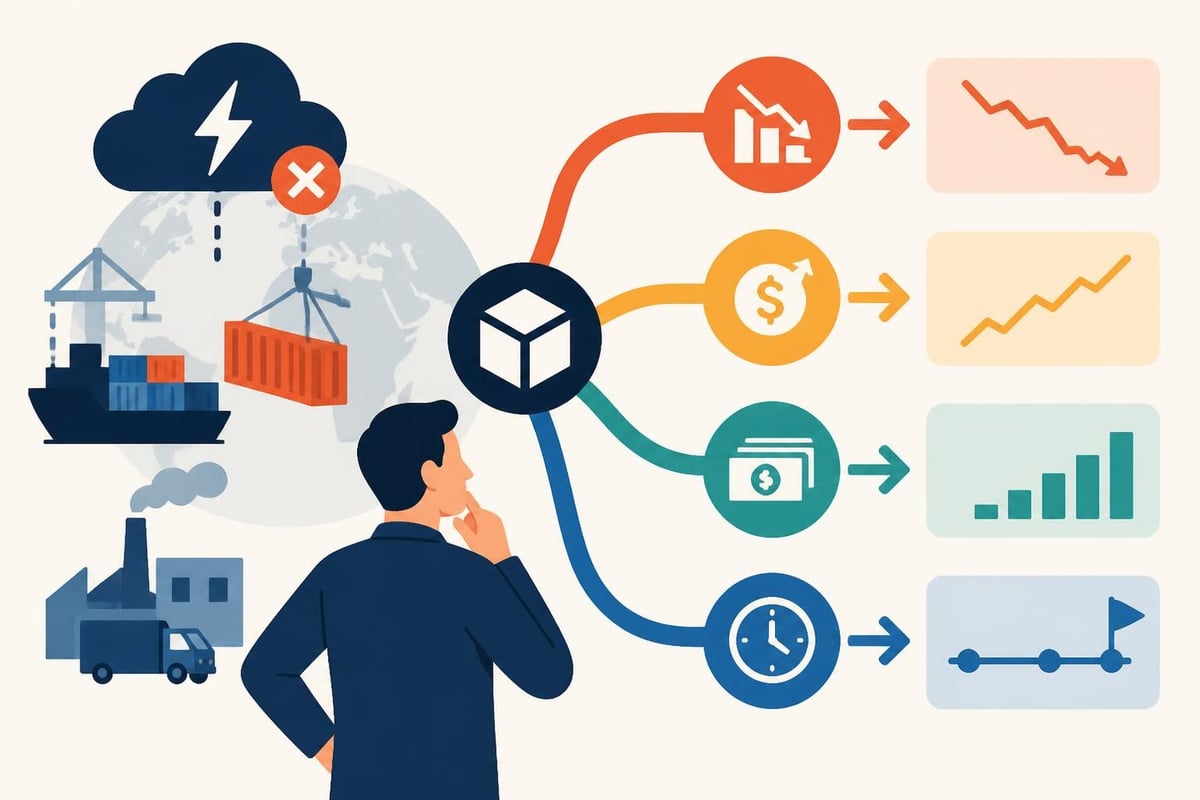
Supply chain risk solutions must include robust financial modeling capabilities. Organizations need quantitative frameworks that estimate the financial impact of various disruption scenarios, informing both contingency planning and capital allocation decisions.
Scenario modeling should address:
- Revenue impact modeling estimating lost sales from stockouts or delivery failures
- Cost escalation scenarios projecting emergency sourcing and expedited logistics expenses
- Working capital stress testing analyzing inventory buildup or cash conversion disruptions
- Covenant compliance analysis ensuring disruptions won't trigger lender defaults
- Recovery timeline projections estimating duration and cumulative financial impact
The gold industry faces unique scenario planning challenges. Price volatility, refining capacity constraints, and international transport regulations create complex interdependencies. Resilience and risk management strategies must account for these sector-specific factors while maintaining financial flexibility.
Implementing Proactive Risk Mitigation Strategies
Identification and assessment provide insight, but organizations must translate that knowledge into concrete mitigation actions. Effective supply chain risk solutions combine multiple defensive layers, ensuring that single point failures cannot compromise overall operations.
Supplier Diversification and Qualification
Reducing concentration risk requires deliberate supplier diversification strategies balanced against economies of scale and relationship benefits. Organizations should maintain qualified alternative suppliers for critical inputs, even when primary relationships perform well.
Supplier qualification criteria should include:
- Financial stability analysis through credit ratings and financial statement review
- Operational capacity assessment including backup production capabilities
- Geographic risk evaluation considering regional vulnerabilities
- Compliance and quality management system verification
- Cybersecurity posture and data protection practices
For commodity-dependent businesses, supplier relationships extend beyond simple vendor management. Industry risk considerations in sectors like precious metals require deep understanding of refining capacity, regulatory compliance, and international trade dynamics.
Inventory Strategy and Buffer Stock Optimization
Strategic inventory management represents a critical supply chain risk solution, though it creates tension with working capital efficiency goals. Organizations must balance the cost of carrying safety stock against the financial impact of stockouts and production interruptions.
Advanced inventory strategies incorporate multiple approaches:
- Safety stock calculation based on demand variability and lead time uncertainty
- Strategic stockpiling of long lead-time or single-source components
- Vendor-managed inventory programs transferring holding costs while maintaining availability
- Consignment arrangements reducing capital requirements while ensuring supply access
- Regional distribution positioning inventory closer to demand centers
The challenge intensifies for high-value commodities like gold, where inventory carrying costs significantly impact returns. Organizations need sophisticated working capital management approaches that optimize inventory levels against both supply risk and capital efficiency.
Technology-Enabled Supply Chain Risk Solutions
Digital transformation has fundamentally changed how organizations monitor, analyze, and respond to supply chain risks. Technology platforms enable real-time visibility, predictive analytics, and automated response protocols that were impossible with manual processes.
Supply Chain Visibility and Monitoring Systems
Comprehensive visibility across multi-tier supply networks forms the backbone of modern risk solutions. Organizations can no longer afford blind spots in their upstream dependencies or downstream distribution channels.
Leading platforms provide:
- Real-time tracking of shipments, inventory positions, and supplier production status
- Multi-tier mapping revealing hidden dependencies beyond direct suppliers
- Risk scoring algorithms continuously evaluating supplier health and external threats
- Alert systems flagging emerging risks before they impact operations
- Dashboard analytics presenting complex supply networks in actionable formats
Industry-specific solutions address unique requirements. For example, pharmaceutical supply chain risk management requires specialized capabilities for mapping global relationships and maintaining regulatory compliance. Similar specialized tools serve other sectors with complex regulatory or quality requirements.
Predictive Analytics and Artificial Intelligence
Artificial intelligence and machine learning transform supply chain risk solutions from reactive to predictive. These technologies identify patterns in vast datasets, forecast disruptions before they occur, and recommend optimal response strategies.
Recent research on causal machine learning in supply chain risk management demonstrates how advanced analytics enable "what-if" scenario planning that improves decision-making. Rather than simply identifying correlations, causal models help organizations understand underlying mechanisms and intervention effectiveness.
| Technology Capability | Risk Management Application | Business Value |
|---|---|---|
| Predictive analytics | Supplier failure forecasting | Early intervention opportunity |
| Natural language processing | News and social media monitoring | Geopolitical risk detection |
| Network analysis | Critical path identification | Targeted mitigation focus |
| Optimization algorithms | Alternate routing and sourcing | Cost-effective contingency plans |
Organizations implementing AI-powered supply chain risk solutions should consider the AI supply chain's own risks, including data quality dependencies, algorithm transparency, and system vulnerabilities. A comprehensive approach addresses both operational supply chains and the technology supply chains supporting them.
Governance and Organizational Capabilities
Technology and analytics provide tools, but effective supply chain risk solutions require strong governance frameworks and organizational capabilities. Risk management cannot succeed as a siloed function disconnected from strategic planning and financial management.
Cross-Functional Risk Governance
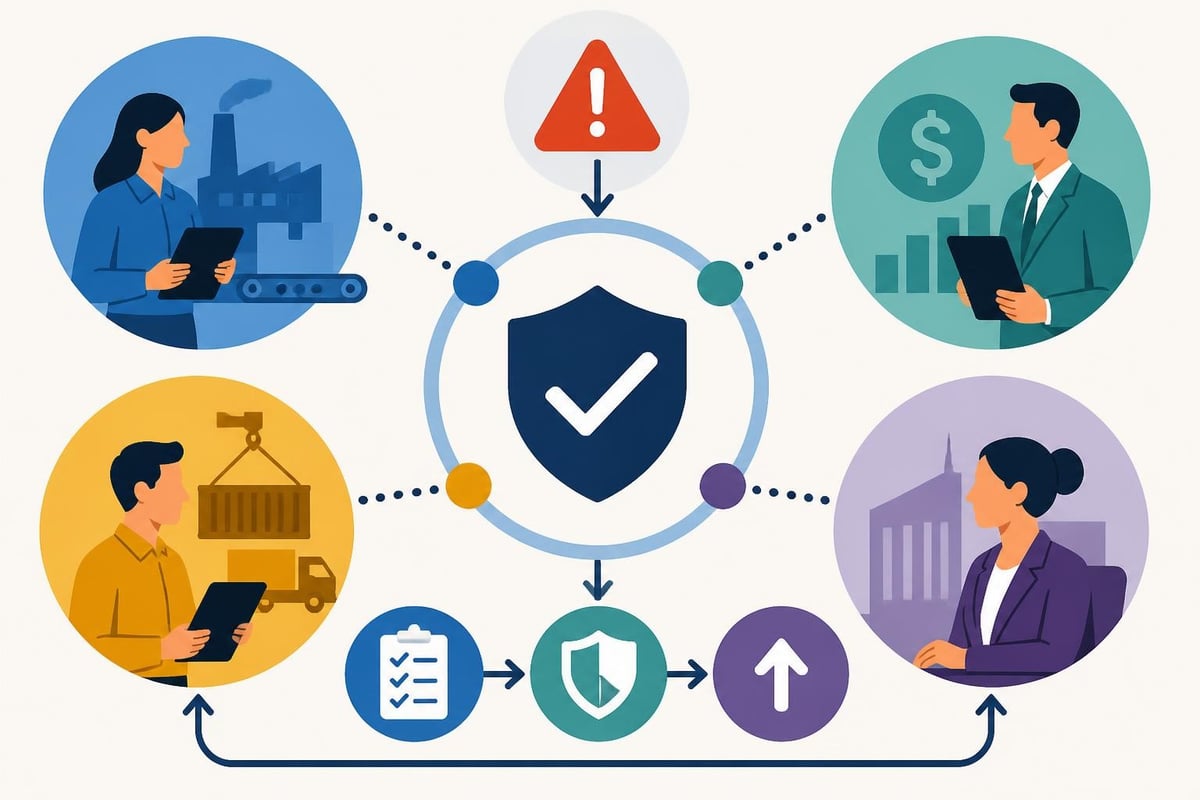
Supply chain risk spans multiple organizational functions, requiring coordinated governance that bridges operations, finance, procurement, and executive leadership. Effective governance structures establish clear accountability, decision rights, and escalation protocols.
Essential governance components include:
- Executive steering committees providing strategic direction and resource allocation
- Cross-functional risk teams coordinating assessment and mitigation activities
- Clear escalation protocols defining when and how to elevate emerging threats
- Regular reporting cadences keeping leadership informed without overwhelming detail
- Integration with enterprise risk management connecting supply chain risks to broader frameworks
Financial advisory professionals play crucial roles in these governance structures. Their expertise in risk decision-making and capital allocation helps translate operational risks into financial terms that drive appropriate resource commitments.
Building Internal Capabilities and Expertise
Sustainable supply chain risk solutions require internal expertise that combines operational knowledge, financial acumen, and analytical capabilities. Organizations cannot rely exclusively on external consultants or technology vendors.
Capability development should address:
- Risk analysis skills including quantitative modeling and scenario planning
- Supplier relationship management balancing partnership and oversight
- Financial impact assessment translating operational disruptions to P&L and balance sheet effects
- Technology platform proficiency maximizing value from monitoring and analytics tools
- Crisis management and business continuity executing effective responses under pressure
Many organizations benefit from partnerships with experienced advisors who provide both strategic guidance and practical implementation support. Corporate finance advisory services that understand supply chain financial impacts help build internal capabilities while addressing immediate risks.
Financial Resilience Through Supply Chain Risk Solutions
The ultimate goal of supply chain risk solutions extends beyond avoiding disruptions. Organizations seek financial resilience: the ability to absorb shocks, maintain stakeholder confidence, and emerge from crises with competitive advantages intact.
Liquidity Planning and Contingency Financing
Supply chain disruptions often create sudden liquidity demands. Emergency sourcing, expedited logistics, and inventory rebuilding can strain cash positions precisely when revenue disruptions reduce inflows. Comprehensive risk solutions must include financial contingency planning.
Liquidity preparedness strategies include:
- Stress testing cash flows under various supply chain disruption scenarios
- Pre-arranged credit facilities providing immediate access to contingency capital
- Insurance products transferring catastrophic supply chain risks to specialized carriers
- Supplier financing programs managing extended payment terms without damaging relationships
- Asset-based lending structures converting inventory and receivables to available liquidity
Organizations should integrate cash funding strategies with supply chain risk planning, ensuring that operational contingency plans have corresponding financial support. This integration prevents situations where organizations identify effective mitigation strategies but lack capital to execute them.
Lender Communication and Covenant Management
Supply chain disruptions can threaten compliance with loan covenants, particularly those related to EBITDA, working capital ratios, or inventory turns. Proactive lender communication transforms potential covenant violations from crisis triggers into manageable negotiations.
Financial leaders should:
- Provide early warning when supply chain issues might affect covenant compliance
- Present mitigation plans demonstrating management capability and commitment
- Quantify financial impacts with scenario analyses showing best, expected, and worst cases
- Request covenant modifications when disruptions affect metrics without impairing underlying creditworthiness
- Maintain transparency building trust that encourages lender flexibility during challenges
Integrated supply chain risk management approaches from specialized advisory firms help organizations build resilience while maintaining strong lender relationships. These solutions address both operational risks and the financial implications that matter most to capital providers.
Strategic Value Creation Through Risk Management
Advanced organizations recognize that supply chain risk solutions create strategic value beyond defensive protection. Effective risk management enables competitive advantages through operational reliability, customer confidence, and capital efficiency.
Competitive Differentiation Through Reliability
In industries where supply reliability determines market position, robust risk solutions become competitive weapons. Organizations that consistently deliver when competitors face disruptions capture market share and premium pricing opportunities.
This differentiation becomes particularly valuable in:
- Just-in-time manufacturing environments where production stoppages cascade through customer operations
- Commodity markets where reliable supply commands price premiums during shortages
- Regulated industries where disruptions trigger compliance failures and reputational damage
- High-value goods where customer acquisition costs make retention economics critical
The gold industry exemplifies how supply reliability creates competitive advantage. Refiners and traders who maintain consistent sourcing through geopolitical disruptions or production interruptions strengthen customer relationships and capture favorable long-term contracts.
Capital Efficiency and Return Optimization
Well-designed supply chain risk solutions optimize capital deployment by reducing unnecessary inventory buffers, minimizing emergency costs, and avoiding disruption-driven revenue losses. This efficiency directly improves return on invested capital and enterprise value.
Organizations achieve capital efficiency through:
- Risk-adjusted inventory optimization carrying safety stock only where justified by probability-weighted impact analysis
- Supplier collaboration transferring inventory holding to partners with lower capital costs
- Flexible capacity arrangements accessing surge production without permanent overhead investment
- Insurance transfer converting unpredictable large losses to predictable premium payments
- Network design positioning assets and relationships to minimize total system costs
Strategic decision analysis frameworks help organizations evaluate these tradeoffs quantitatively, ensuring that risk mitigation investments generate appropriate returns. This analytical rigor transforms risk management from a cost center to a value creation function.
Emerging Trends and Future Considerations
Supply chain risk solutions continue evolving as new threats emerge and technologies advance. Organizations must maintain awareness of developing trends to ensure their frameworks remain effective against tomorrow's challenges, not just yesterday's disruptions.
Geopolitical Fragmentation and Regionalization
Increasing geopolitical tensions and trade restrictions are fundamentally reshaping global supply networks. Organizations face pressure to regionalize supply chains, reducing dependence on adversarial nations while managing the cost and complexity implications.
This trend creates new requirements for supply chain risk solutions:
- Geopolitical risk monitoring tracking trade policy, sanctions, and diplomatic developments
- Regional sourcing strategies balancing cost optimization against political risk reduction
- Dual-source geographic diversification maintaining capability in multiple political spheres
- Regulatory compliance systems navigating increasingly complex international trade rules
- Scenario planning for potential trade disruptions or market fragmentations
Climate Risk and Sustainability Integration
Climate change introduces both acute and chronic supply chain risks. Extreme weather events disrupt production and logistics with increasing frequency, while long-term climate shifts affect agricultural yields, water availability, and operating conditions.
Organizations must integrate climate considerations into supply chain risk solutions:
- Physical risk assessment evaluating supplier and logistics node exposure to climate hazards
- Transition risk analysis anticipating regulatory changes and market shifts toward sustainability
- Resilience investments hardening critical facilities against climate impacts
- Sustainable sourcing building supply networks aligned with decarbonization commitments
- Disclosure compliance meeting expanding requirements for climate risk reporting
Advanced Technologies and Automation
Emerging technologies promise more sophisticated supply chain risk solutions while introducing new vulnerabilities. Blockchain, Internet of Things sensors, autonomous vehicles, and advanced robotics are transforming supply networks in ways that both enhance and complicate risk management.
Future-oriented organizations should:
- Consider software supply chain risk frameworks as digital dependencies grow
- Evaluate multi-agent decision frameworks that incorporate uncertainty and risk attitudes
- Assess cybersecurity implications of increasingly connected supply networks
- Balance automation benefits against concentration in specialized technology providers
- Develop capabilities to manage risks in hybrid human-automated operations
The gold industry faces unique technology adoption challenges, balancing operational efficiency gains against security requirements for high-value asset handling and regulatory compliance needs.
Effective supply chain risk solutions integrate operational monitoring, financial planning, and strategic decision-making to build organizational resilience that protects value and enables growth. Organizations that approach supply chain risk holistically-recognizing financial implications, leveraging appropriate technologies, and building internal capabilities-position themselves to navigate disruptions while maintaining stakeholder confidence. For businesses seeking to strengthen their financial resilience through comprehensive risk management, AurumCrest Advisory brings over 30 years of experience in practical corporate finance and risk solutions, helping organizations translate supply chain challenges into actionable strategies that protect liquidity and enhance lender relationships.