
The evolution of financial operations has fundamentally changed how corporations access expertise and manage their treasury functions. Services finance represents a comprehensive approach to delivering financial capabilities, combining advisory expertise with operational support to help organizations enhance their financial resilience and strategic positioning. This model has gained significant traction as businesses seek flexible solutions that deliver both strategic insight and practical execution without the overhead of expanding internal teams.
Understanding the Services Finance Model
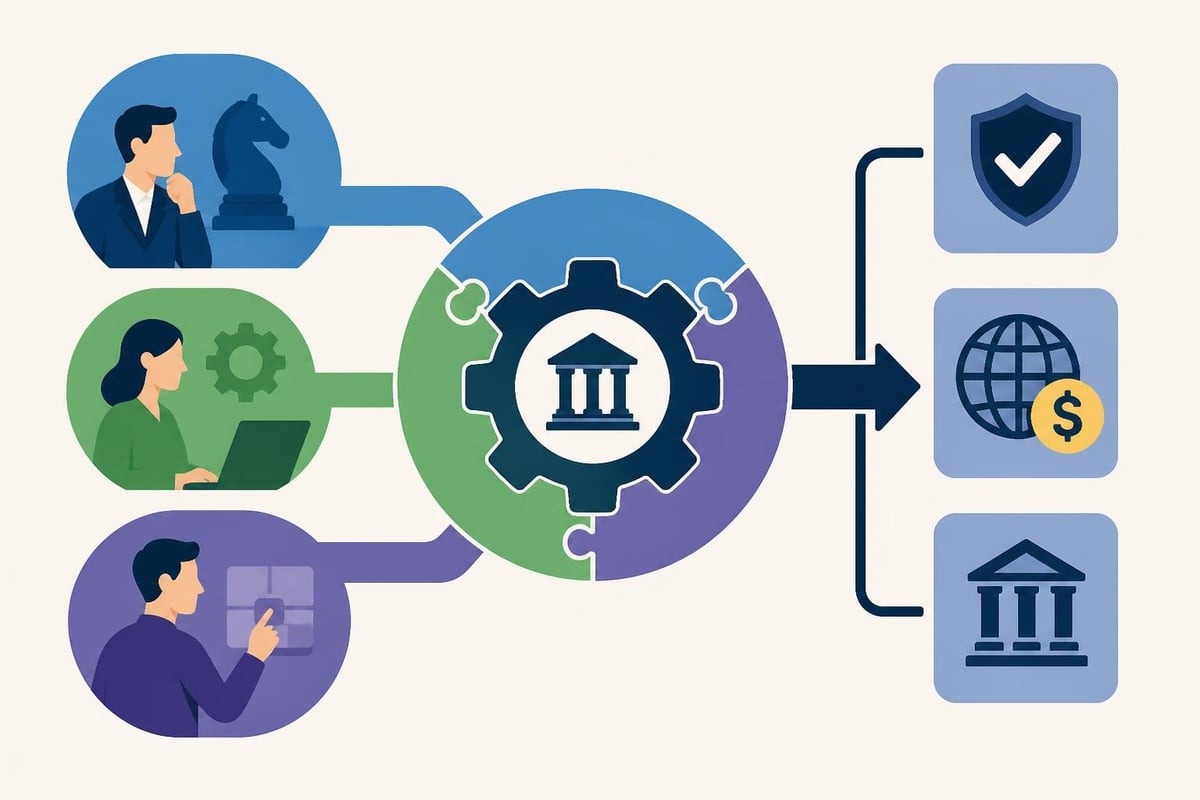
Services finance encompasses a broad spectrum of financial capabilities delivered as managed solutions. Unlike traditional consulting engagements that conclude with recommendations, this approach integrates ongoing support with strategic guidance to create lasting value.
The core components include:
- Treasury and liquidity management services that optimize cash positioning
- Lender relationship management to maintain financing readiness
- Risk assessment and mitigation strategies tailored to industry dynamics
- Governance frameworks that strengthen financial controls
- Compliance monitoring and reporting capabilities
Organizations adopting services finance gain access to specialized expertise without committing to permanent headcount expansion. This flexibility proves particularly valuable during periods of transformation or when navigating complex financial challenges that require deep sector knowledge.
The Shift Toward Managed Financial Solutions
The managed services model has expanded significantly within finance operations. According to KPMG's analysis of Finance as a Service, organizations increasingly recognize that outsourcing specific financial functions can enhance productivity and profitability while allowing internal teams to focus on strategic priorities.
This transition reflects broader market dynamics. CFOs face mounting pressure to deliver more sophisticated analysis and forecasting while simultaneously reducing operational costs. Services finance addresses this challenge by providing scalable expertise that adjusts to organizational needs.
Technology Integration and Financial Services
Artificial intelligence and automation have become central to modern services finance delivery. The financial services industry is experiencing rapid transformation driven by technological advances that reshape how institutions deploy capital and serve clients.
For organizations in specialized sectors like precious metals and commodities, technology integration presents both opportunities and challenges. AI-powered analytics can enhance price forecasting and risk modeling, but governance concerns remain paramount.
Balancing Automation with Human Expertise
CFOs recognize that AI is reshaping the finance industry, yet governance concerns stay front of mind. The most effective services finance providers combine technological capabilities with experienced professionals who understand industry-specific nuances.
This balanced approach proves essential in sectors where relationships, market knowledge, and judgment remain irreplaceable. While automation handles routine processes and data analysis, human expertise guides strategic decisions around financing structures, covenant negotiations, and stakeholder communications.
| Technology Application | Primary Benefit | Governance Consideration |
|---|---|---|
| Cash flow forecasting | Improved accuracy | Model validation requirements |
| Compliance monitoring | Real-time tracking | Audit trail documentation |
| Risk analytics | Pattern identification | Human review protocols |
| Reporting automation | Time efficiency | Data quality controls |
Liquidity Management Through Services Finance
Maintaining optimal liquidity positions requires constant attention to working capital dynamics, banking relationships, and market conditions. Services finance provides the infrastructure to monitor these elements continuously while offering strategic guidance on capital structure decisions.
Effective liquidity management encompasses several critical dimensions. Organizations need visibility into cash positions across entities and geographies. They require forecasting models that account for seasonality, market volatility, and operational variables. Most importantly, they need relationships with financial institutions that provide access to capital when opportunities or challenges arise.
Building Lender Readiness
Lender readiness extends beyond maintaining compliance with existing covenants. It involves positioning the organization to access capital efficiently when needed, whether for expansion, acquisition, or navigating difficult markets.
Key elements include:
- Regular financial reporting that exceeds minimum requirements
- Transparent communication about business performance and outlook
- Documentation systems that facilitate due diligence
- Relationship management with multiple potential financing sources
- Covenant modeling to anticipate and address potential issues
Services finance providers specializing in particular industries bring valuable perspective on lender expectations and market standards. This knowledge helps organizations avoid common pitfalls and structure their operations to maintain maximum financial flexibility.
Risk Solutions in Specialized Industries
Different industries face distinct risk profiles that demand tailored solutions. The gold and precious metals sector, for example, confronts unique challenges around price volatility, geopolitical factors, and supply chain complexity that require specialized knowledge.

Services finance providers with deep industry experience can structure comprehensive risk management programs that address:
- Market risk exposure from commodity price fluctuations
- Counterparty risk in complex supply chains
- Operational risk related to custody and logistics
- Regulatory risk from evolving compliance requirements
- Financing risk including covenant compliance and refinancing
Developing Practical Risk Frameworks
Theoretical risk models often fail in practice when they don't account for operational realities. The most effective risk frameworks emerge from collaboration between external advisors who understand industry dynamics and internal teams who know the business intimately.
This partnership approach ensures risk solutions remain practical and implementable rather than becoming compliance exercises that add cost without value. Services finance providers who combine strategic thinking with hands-on execution can help organizations build risk programs that genuinely enhance resilience.
Governance and Financial Control
Strong governance provides the foundation for sustainable financial performance. Services finance can strengthen governance frameworks by introducing best practices while respecting organizational culture and operational requirements.
Governance improvements typically focus on several areas:
- Board-level financial reporting that balances detail with clarity
- Delegation of authority frameworks that enable efficient decision-making
- Internal control systems that prevent errors and irregularities
- Policy documentation that codifies expectations and procedures
- Audit readiness protocols that streamline external reviews
Organizations with limited internal resources often struggle to maintain robust governance as they grow or face increased complexity. Services finance fills this gap by providing expertise on governance standards and helping implement systems that scale with the business.
Implementing Effective Controls
Financial controls work best when designed into processes rather than layered on afterward. Services finance providers can assess existing workflows, identify control gaps, and recommend enhancements that improve accuracy and efficiency simultaneously.
| Control Area | Common Gap | Services Finance Solution |
|---|---|---|
| Cash management | Manual reconciliation delays | Automated matching and exception reporting |
| Contract approval | Unclear authority limits | Documented delegation framework |
| Vendor payments | Duplicate payment risk | Three-way matching protocols |
| Financial close | Extended timeline | Standardized checklists and calendars |
Strategic Value Beyond Cost Savings
While services finance often delivers cost efficiencies compared to internal expansion, the strategic value extends well beyond expense reduction. Access to specialized expertise, enhanced credibility with stakeholders, and improved decision-making capabilities create advantages that compound over time.
Organizations working with experienced services finance advisors gain perspective on industry benchmarks, emerging best practices, and structural alternatives they might not otherwise consider. This outside viewpoint proves particularly valuable during strategic inflection points like ownership transitions, significant capital investments, or market downturns.
Building Financial Resilience
Financial resilience requires more than strong balance sheets. It demands systems, relationships, and expertise that enable organizations to navigate uncertainty while pursuing opportunities. Services finance contributes to resilience by:
- Strengthening relationships with capital providers before needs become urgent
- Implementing forecasting and scenario planning capabilities
- Developing contingency plans for various market conditions
- Creating governance structures that support sound decision-making under pressure
- Building documentation and reporting systems that maintain stakeholder confidence

The Future of Services Finance Delivery
The services finance model continues evolving as technology capabilities advance and market expectations shift. Scaling AI in financial services requires careful attention to data quality, governance frameworks, and change management alongside technical implementation.
Looking forward, successful services finance providers will increasingly blend technological capabilities with human judgment. Automation will handle routine processes and provide enhanced analytics, while experienced professionals focus on interpretation, strategy, and relationship management.
Industry-specific knowledge will become even more valuable as financial operations grow more complex. Generic solutions may address basic needs, but organizations facing specialized challenges will seek advisors who understand their particular market dynamics, regulatory environment, and operational realities.
Selecting the Right Services Finance Partner
Choosing a services finance provider requires careful evaluation of both capabilities and cultural fit. Organizations should assess:
- Industry experience and demonstrated results in similar situations
- Technical capabilities including systems, methodologies, and tools
- Team continuity to ensure consistent service delivery
- Scalability to support growth and changing needs
- Cultural alignment with organizational values and working style
The most productive partnerships emerge when both parties view the relationship as collaborative rather than transactional. Services finance works best when external advisors integrate closely with internal teams, sharing knowledge and building capabilities rather than creating dependency.
Measuring Services Finance Impact
Demonstrating value from services finance engagements requires clear metrics aligned with organizational priorities. Different situations call for different measures, but common indicators include:
- Reduced borrowing costs from improved lender relationships
- Faster financial close cycles enabling timelier decisions
- Enhanced forecast accuracy supporting better resource allocation
- Decreased compliance incidents avoiding penalties and reputational damage
- Improved working capital efficiency freeing cash for strategic uses
Beyond quantitative measures, qualitative improvements matter significantly. Enhanced stakeholder confidence, reduced management stress, and improved organizational capabilities create lasting value even when difficult to quantify precisely.
Creating Accountability Frameworks
Effective services finance relationships include clear accountability for results. This might involve specific deliverables, performance metrics, or outcome-based arrangements depending on the engagement scope.
Regular review sessions ensure alignment between provider activities and organizational priorities. These discussions should address both tactical execution and strategic direction, allowing adjustments as circumstances evolve.
| Review Frequency | Focus Areas | Key Participants |
|---|---|---|
| Weekly | Operational execution, immediate issues | Working team members |
| Monthly | Progress against objectives, emerging needs | Department leadership |
| Quarterly | Strategic alignment, relationship health | Executive sponsors |
| Annual | Overall value, engagement structure | C-suite, board representatives |
Integration with Broader Financial Strategy
Services finance should complement and enhance broader financial strategy rather than existing in isolation. The most successful engagements align closely with organizational objectives around growth, profitability, risk management, and stakeholder value.
This integration requires ongoing communication between services finance providers and organizational leadership. Strategic plans should inform the scope and priorities of services finance work, while insights from financial operations should influence strategic decisions.
For organizations in transitional phases, whether due to ownership changes, market shifts, or operational transformation, services finance provides stability and expertise during periods of uncertainty. The combination of continuity and specialized knowledge helps maintain financial performance while internal teams focus on core business priorities.
Services finance represents a powerful approach for organizations seeking to enhance their financial capabilities without expanding permanent infrastructure. By combining strategic advisory with practical execution, this model delivers flexibility, expertise, and results that strengthen financial resilience. AurumCrest Advisory brings over three decades of experience helping organizations optimize liquidity, maintain lender readiness, implement risk solutions, and strengthen governance across corporate finance and the gold industry. If your organization seeks to enhance financial control and strategic positioning through experienced partnership, connect with our team to explore how we can support your specific objectives.