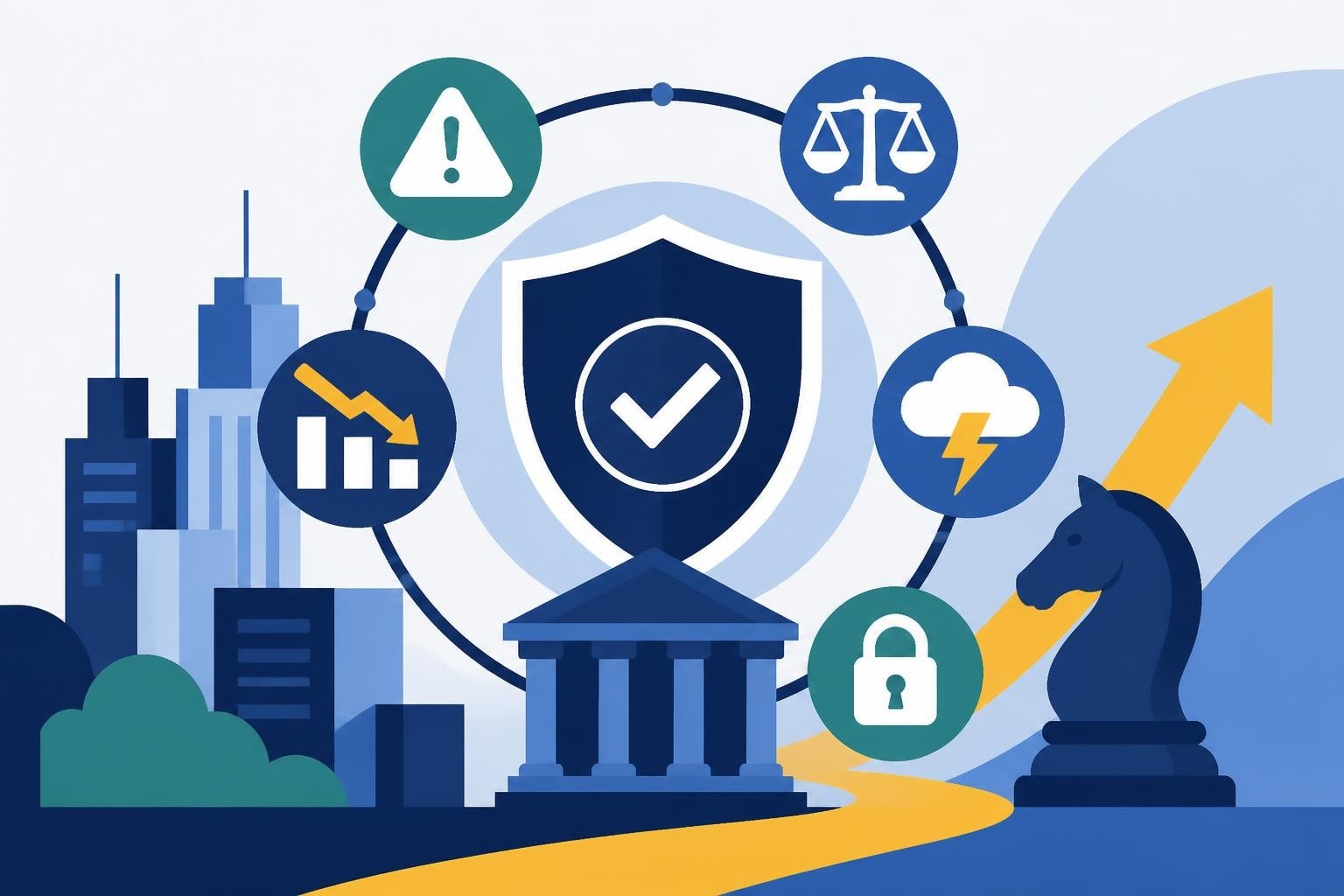
Understanding the relationship between risk and risk management forms the foundation of sound financial decision-making. For corporate finance professionals and gold industry stakeholders, recognizing how different risk types interact and compound requires both strategic vision and practical execution. The ability to identify, assess, and respond to various risk categories determines whether organizations thrive during uncertainty or struggle to maintain stability. This comprehensive exploration examines the dual nature of risk and risk frameworks, providing actionable insights for finance advisory clients seeking enhanced resilience and control.
The Dual Nature of Risk and Risk Assessment
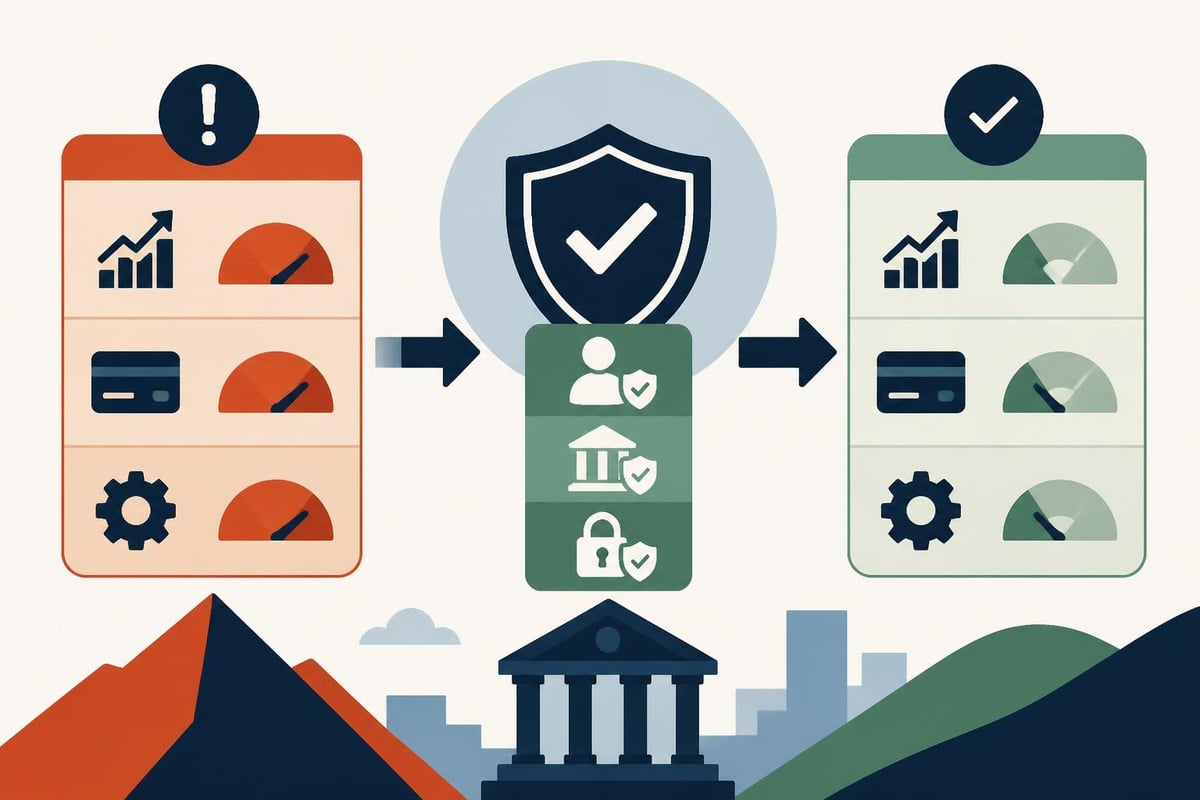
Financial professionals must distinguish between inherent risk (the natural exposure before controls) and residual risk (what remains after mitigation). This risk and risk relationship shapes every strategic decision organizations make.
Inherent Versus Residual Risk Frameworks
Inherent risk represents the gross exposure organizations face without any protective measures. In corporate finance, this includes market volatility, commodity price fluctuations, and credit exposure from counterparties. Residual risk reflects what remains after implementing controls, policies, and mitigation strategies.
Key differences include:
- Inherent risk exists naturally within business operations and market conditions
- Residual risk demonstrates the effectiveness of your risk management program
- Risk appetite determines acceptable residual risk levels for your organization
- Control gaps represent the distance between inherent and residual risk
Understanding these distinctions enables finance teams to allocate resources efficiently. Organizations with mature risk programs systematically reduce residual risk to levels aligned with board-approved risk appetite statements.
| Risk Category | Inherent Risk Level | Common Controls | Target Residual Risk |
|---|---|---|---|
| Market Risk | High | Hedging, diversification | Medium |
| Credit Risk | Medium-High | Due diligence, limits | Low-Medium |
| Operational Risk | Medium | Processes, insurance | Low |
| Liquidity Risk | High | Cash reserves, facilities | Medium |
The gap between these risk states reveals where governance improvements deliver maximum value. Companies excelling at risk and risk management continuously monitor this differential, adjusting controls as market conditions evolve.
Establishing Comprehensive Risk Identification Processes
Effective risk and risk identification begins with systematic discovery across all operational areas. Financial advisory clients benefit from structured approaches that uncover both obvious and subtle exposures.
Multi-Dimensional Risk Discovery Methods
Organizations should deploy multiple identification techniques simultaneously. Start with historical analysis examining past losses, near-misses, and control failures. This backward-looking approach reveals patterns and recurring vulnerabilities.
Forward-looking techniques include scenario planning, stress testing, and emerging risk workshops. For gold industry participants, this might involve modeling price shocks, supply chain disruptions, or regulatory changes affecting precious metals markets.
- Conduct cross-functional workshops bringing together operations, finance, and business unit leaders
- Review industry loss databases to understand peer experiences and sector-specific challenges
- Analyze financial statements for concentrations, dependencies, and balance sheet vulnerabilities
- Engage external experts who provide independent perspectives on governance gaps
- Map process flows to identify control weaknesses and single points of failure
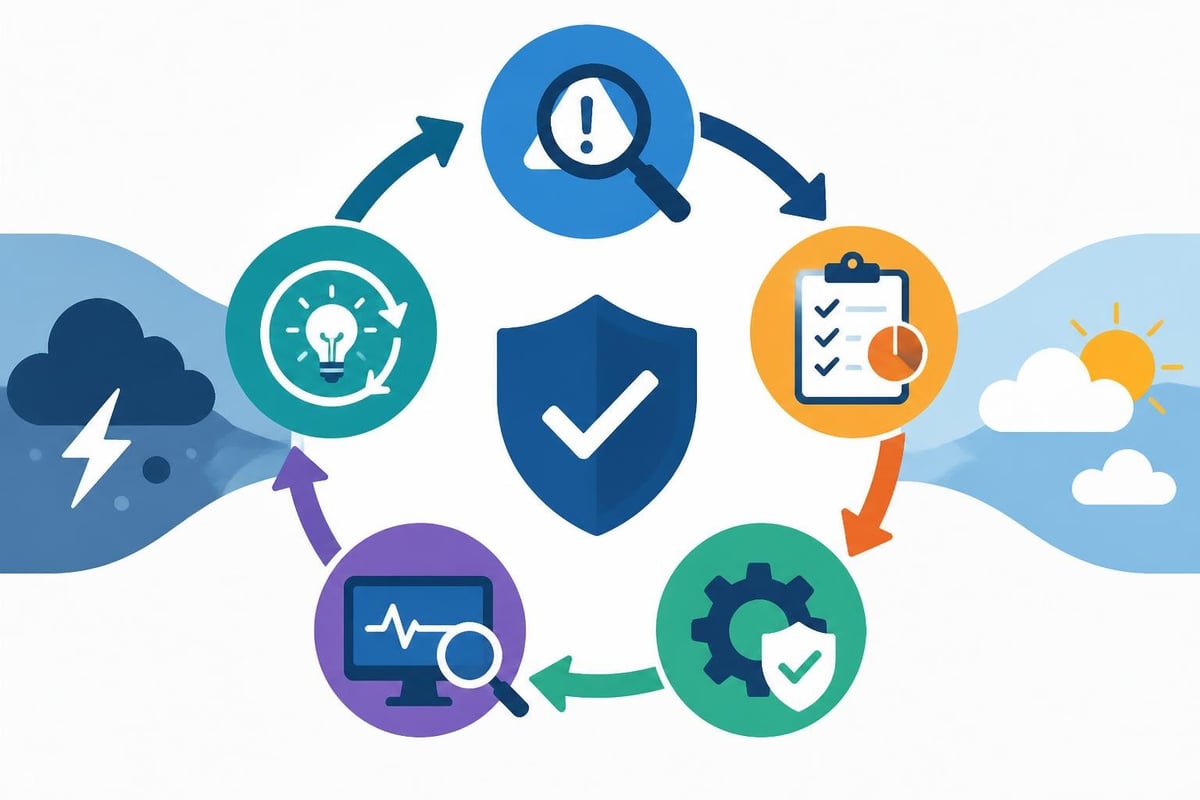
The comprehensive risk assessment process typically involves five core steps that organizations should customize based on their specific context and complexity.
Industry-Specific Risk Cataloging
Finance advisory firms serve clients across diverse sectors, each with unique risk profiles. Gold industry participants face commodity price volatility, geopolitical supply risks, and environmental compliance requirements. Corporate finance teams managing leveraged operations confront refinancing risk, covenant compliance, and lender relationship dynamics.
Building comprehensive risk registers requires understanding both universal and sector-specific exposures. Universal risks include fraud, cybersecurity threats, and talent retention. Sector risks demand specialized knowledge about regulatory environments, market structures, and operational complexities.
Organizations with mature risk and risk frameworks maintain living risk registers that evolve quarterly. These documents categorize risks by type, assign ownership, document existing controls, and track mitigation initiatives. Regular updates ensure the register reflects current business conditions rather than historical snapshots.
Quantitative and Qualitative Risk Assessment Methodologies
Selecting appropriate risk assessment methodologies depends on data availability, organizational sophistication, and decision-making needs. The risk and risk evaluation phase transforms identified exposures into actionable intelligence.
Quantitative Analysis Techniques
Financial organizations often prefer quantitative methods that generate numeric risk estimates. These approaches require sufficient historical data and statistical expertise but produce defensible metrics for board reporting.
Common quantitative techniques include:
- Value at Risk (VaR) calculations estimating potential losses at specified confidence levels
- Monte Carlo simulations modeling thousands of scenarios to generate probability distributions
- Expected loss calculations combining probability and impact estimates
- Sensitivity analysis examining how key variables affect outcomes
Quantitative methods excel when evaluating market risk, credit risk, and operational risks with substantial loss history. They provide comparable metrics across risk categories and support capital allocation decisions.

Qualitative Risk Evaluation Frameworks
Many risk and risk scenarios lack sufficient data for quantitative modeling. Emerging risks, strategic threats, and rare but severe events require qualitative assessment using expert judgment and structured frameworks.
Risk matrices plotting likelihood against impact remain popular despite limitations. These tools facilitate discussions and prioritization when precise calculations prove impossible or impractical.
| Assessment Method | Best Applications | Key Strengths | Primary Limitations |
|---|---|---|---|
| Quantitative (VaR, simulation) | Market, credit, operational risks | Precise, comparable, data-driven | Requires historical data, complex |
| Qualitative (matrices, scoring) | Strategic, emerging, reputational risks | Accessible, flexible, expert-driven | Subjective, less precise |
| Hybrid (scored parameters) | Enterprise risk management | Balances rigor and practicality | Complexity in design |
Sophisticated organizations employ hybrid approaches combining quantitative rigor where data permits and qualitative judgment where it doesn't. This balanced methodology ensures comprehensive coverage while maintaining analytical credibility.
Implementing Effective Risk Treatment Strategies
After assessing risk and risk exposure levels, organizations must decide how to respond. Treatment strategies fall into four primary categories, each appropriate for different circumstances and risk types.
The Four Risk Response Options
Risk avoidance eliminates exposure by discontinuing risky activities. A finance advisory client might exit certain market segments or refuse transactions exceeding risk appetite thresholds. While effective, avoidance also eliminates potential rewards associated with managed risk-taking.
Risk reduction implements controls lowering likelihood or impact. This represents the most common response, encompassing everything from diversification strategies to enhanced due diligence processes. The goal involves reducing residual risk to acceptable levels while maintaining business operations.
Risk transfer shifts exposure to third parties through insurance, hedging, or contractual provisions. Gold industry participants frequently hedge commodity price exposure through derivatives. Corporate finance teams transfer credit risk through guarantees or insurance products.
Risk acceptance acknowledges certain exposures as unavoidable or too expensive to mitigate further. Organizations formally accept these risks after confirming they fall within approved risk appetite parameters.
Effective risk and risk treatment programs combine multiple responses tailored to specific exposures. A single risk might involve partial reduction through controls, partial transfer through insurance, and acceptance of remaining residual exposure.
Prioritization and Resource Allocation
Limited budgets demand prioritized risk treatment. Organizations should address high-likelihood, high-impact risks first, followed by severe but unlikely scenarios, then moderate risks requiring minimal resources.
- Calculate risk-adjusted returns comparing mitigation costs against expected loss reduction
- Consider cascading effects where treating one risk reduces multiple related exposures
- Evaluate control efficiency selecting interventions delivering maximum risk reduction per dollar spent
- Balance quick wins with long-term structural improvements to governance frameworks
- Align treatments with strategic objectives ensuring risk management enables rather than constrains growth
The relationship between risk and risk appetite guides these decisions. Risks exceeding appetite demand immediate treatment regardless of cost. Risks within appetite may warrant deferred action if resources serve better purposes elsewhere.
Continuous Risk Monitoring and Adjustment
Risk environments constantly evolve, requiring ongoing surveillance and adaptive responses. Static risk assessments rapidly become obsolete as markets shift, regulations change, and new threats emerge. Effective risk monitoring demands continuous attention across all organizational levels.
Key Risk Indicators and Trigger Points
Organizations should establish key risk indicators (KRIs) providing early warning of deteriorating conditions. These metrics track specific variables correlated with risk and risk materialization, enabling proactive intervention before losses occur.
For liquidity risk, relevant KRIs include cash conversion cycles, days sales outstanding, and available credit facility utilization. Market risk monitoring incorporates volatility measures, correlation breakdowns, and position concentrations. Operational risk KRIs track error rates, system availability, and control test failures.
Effective KRI frameworks establish trigger points prompting escalation and response. Green zones indicate normal operations within risk appetite. Yellow zones signal increased monitoring and possible intervention. Red zones demand immediate action and executive notification.
Essential monitoring practices include:
- Daily dashboard reviews for critical financial and operational metrics
- Weekly risk committee meetings evaluating trending indicators and emerging issues
- Monthly board risk reports summarizing key exposures and mitigation progress
- Quarterly deep-dive assessments of specific risk categories or business units
- Annual comprehensive risk program reviews updating frameworks and methodologies
Technology platforms increasingly automate risk and risk monitoring, delivering real-time visibility across diverse data sources. These systems aggregate information from financial systems, operational databases, and external feeds, applying analytics to identify concerning patterns.
Adaptive Risk Management Cycles
Mature organizations recognize that risk management operates as a continuous cycle rather than a one-time project. The plan-do-check-act methodology applies perfectly to risk programs.
Planning involves identifying and assessing risks while designing treatment strategies. Doing implements those strategies through controls, policies, and operational changes. Checking monitors effectiveness through KRIs, testing, and incident analysis. Acting adjusts the program based on lessons learned and changing conditions.
This cyclical approach ensures risk management remains relevant and effective despite evolving threats. Organizations should refresh comprehensive risk assessments annually while updating specific elements quarterly or when significant changes occur.
Integrating Risk Management with Strategic Planning
Risk and risk considerations should inform strategic decisions rather than existing as separate compliance functions. Organizations achieving this integration make better-informed choices aligned with both opportunity pursuit and prudent risk-taking.
Risk-Informed Decision-Making Frameworks
Every strategic initiative carries risk. Expansion plans introduce market risk and execution risk. New product launches involve development risk and market acceptance uncertainty. Partnership agreements create counterparty risk and reputational exposure.
Integrating risk assessment into strategic planning ensures decision-makers understand these exposures before committing resources. This integration doesn't eliminate risk-taking but ensures risks align with capabilities and appetite.
Finance advisory clients benefit from frameworks requiring formal risk evaluation as part of capital allocation processes. Proposals should quantify expected returns alongside associated risks, enabling comparisons across competing initiatives.
Integration best practices include:
- Requiring risk assessments for all material strategic decisions and capital investments
- Including risk officers in strategic planning committees and major project teams
- Establishing hurdle rates adjusted for project-specific risk profiles
- Conducting post-implementation reviews comparing actual versus projected risk outcomes
- Building scenario planning into long-range forecasts and business plans
Organizations excelling at this integration view risk management as enabling growth rather than constraining it. By understanding risk and risk tolerances, leadership confidently pursues opportunities others might avoid while steering clear of exposures exceeding organizational capabilities.
Governance Structures Supporting Risk Integration
Effective risk governance clarifies roles, responsibilities, and accountabilities across the organization. The three lines of defense model provides a proven framework separating operational risk ownership, independent oversight, and assurance functions.
First-line business units own and manage risks inherent in their operations. They implement controls, monitor effectiveness, and escalate issues requiring intervention. Second-line risk and compliance functions provide oversight, challenge, and support, ensuring consistency across the enterprise. Third-line internal audit delivers independent assurance that risk management operates effectively.
| Governance Level | Primary Responsibilities | Key Activities | Reporting Lines |
|---|---|---|---|
| Board | Oversee, set appetite | Approve frameworks, monitor key risks | Shareholders |
| Executive/CRO | Design, coordinate | Develop policies, aggregate reporting | Board |
| Business Units | Identify, manage | Implement controls, monitor KRIs | Executive leadership |
| Risk Function | Challenge, support | Independent assessment, methodology | CRO, Board |
This structure works when organizations clearly define boundaries and maintain appropriate independence. Risk functions must challenge business decisions without becoming obstacles to legitimate risk-taking within approved appetite.
Specialized Risk Considerations for Finance Advisory Clients
Corporate finance environments and gold industry operations present unique risk and risk management challenges requiring specialized approaches and expertise.
Liquidity and Lender Relationship Risks
Finance advisory clients frequently prioritize liquidity management and lender readiness. These interconnected risks determine whether organizations can meet obligations during stress and access capital when opportunities arise.
Liquidity risk encompasses both funding liquidity (ability to meet cash obligations) and market liquidity (ability to exit positions without significant loss). Corporate finance teams should model cash flows under various scenarios, identifying potential shortfalls before they materialize.
Lender relationship risk involves more than covenant compliance. Banks assess overall financial health, management quality, and strategic direction. Deteriorating relationships constrain flexibility and increase refinancing costs even absent technical defaults.
Strong governance demonstrates to lenders that organizations take risk management seriously. Regular communication, transparent reporting, and proactive issue resolution build confidence supporting favorable terms and expanded credit availability.
Gold Industry Commodity and Operational Risks
Gold industry participants face pronounced commodity price volatility alongside operational complexities including exploration risk, production uncertainties, and environmental compliance requirements.
Price risk management typically involves derivative hedging strategies, though these introduce basis risk and margin requirements. Organizations must balance protecting downside scenarios against sacrificing upside participation and consuming capital for margin calls.
Operational risks in mining and refining include safety incidents, equipment failures, and environmental events. These exposures require robust operational controls, comprehensive insurance programs, and crisis management capabilities.
Geopolitical risk affects supply chains and market access, particularly for internationally diversified operations. Trade restrictions, regulatory changes, and political instability can disrupt carefully planned strategies.
Effective risk and risk management in this sector demands deep industry knowledge combined with sophisticated financial risk techniques. Advisory firms providing these services must understand both commodity markets and operational realities.
Advanced Risk Analytics and Technology Applications
Modern risk management increasingly leverages advanced analytics and technology platforms delivering capabilities impossible through manual processes. These tools enhance both efficiency and effectiveness when properly implemented.
Predictive Analytics and Machine Learning
Predictive models identify risk patterns humans might miss in complex, high-dimensional data. Machine learning algorithms detect anomalies signaling fraud, predict default probabilities, and forecast market movements under various conditions.
These capabilities prove particularly valuable for operational risk where subtle patterns indicate emerging problems. Transaction monitoring systems flag suspicious activities. Quality control algorithms identify production issues before significant losses accumulate.
Implementation requires quality data, appropriate model selection, and ongoing validation. Models trained on historical data may fail when conditions change, demanding continuous monitoring and periodic retraining.
Organizations should view these tools as augmenting rather than replacing human judgment. Algorithms excel at pattern recognition and processing vast datasets. Humans provide context, intuition, and ethical oversight ensuring appropriate application.
Integrated Risk Management Platforms
Technology platforms consolidate risk data from disparate sources, providing unified visibility across the enterprise. These systems support risk and risk assessment workflows, control testing, incident management, and reporting functions.
Benefits include reduced manual effort, improved consistency, enhanced auditability, and real-time monitoring capabilities. Executives access dashboards showing current risk profiles rather than waiting for monthly reports based on stale data.
Selection criteria should emphasize flexibility, integration capabilities, and user experience alongside functionality. The best platform delivers limited value if complexity prevents widespread adoption across business units.
Implementation demands careful planning, data preparation, and change management. Organizations often underestimate the effort required to cleanse and migrate historical risk information into new systems.
Building Risk Culture and Organizational Capability
Technology and frameworks provide necessary infrastructure, but organizational culture determines whether risk and risk management succeeds or remains a compliance exercise. Building appropriate risk awareness across all levels represents a critical success factor.
Embedding Risk Awareness Through Training and Communication
Employees at every level should understand how their decisions affect organizational risk. Frontline staff implement controls preventing operational losses. Middle managers balance growth objectives against risk constraints. Executives set strategic direction within board-approved appetite parameters.
Achieving this understanding requires ongoing training tailored to specific roles. Compliance training covers regulatory requirements and policy adherence. Leadership development incorporates risk-informed decision-making frameworks. Specialized training equips risk professionals with technical skills in quantitative methods and assessment techniques.
Communication reinforces training through multiple channels. Risk updates in town halls demonstrate leadership commitment. Newsletter case studies illustrate lessons learned from incidents. Recognition programs celebrate employees preventing losses through effective risk management.
Culture-building initiatives include:
- Incorporating risk objectives into performance evaluations and compensation structures
- Celebrating near-miss reporting that prevents incidents rather than punishing mistake disclosure
- Ensuring executives model appropriate risk behaviors and challenge excessive risk-taking
- Creating forums where employees safely discuss concerns without fear of retaliation
- Conducting surveys measuring risk culture maturity and identifying improvement opportunities
Organizations with strong risk cultures view challenges as opportunities to improve rather than problems to hide. This transparency enables faster identification and resolution of emerging issues.
Developing Risk Management Expertise
Building internal capability reduces dependence on external advisors while ensuring risk and risk frameworks remain current with evolving best practices. Organizations should invest in developing risk talent through certifications, conferences, and peer networking.
Professional certifications including Financial Risk Manager (FRM) and Certified Risk Professional (CRP) validate technical competence. Industry associations provide forums for sharing experiences and learning from peers facing similar challenges.
Rotation programs exposing risk professionals to business operations enhance their effectiveness. Understanding operational realities improves risk assessment quality and strengthens credibility when challenging business decisions.
External advisors complement internal teams by providing specialized expertise, independent perspectives, and additional capacity during major initiatives. The optimal model balances permanent internal capability with selective external engagement addressing specific needs.
Mastering the interplay between risk and risk management capabilities positions organizations to navigate uncertainty while pursuing strategic objectives confidently. Finance advisory clients who implement robust identification, assessment, treatment, and monitoring frameworks achieve enhanced resilience and informed decision-making across all operational areas. AurumCrest Advisory combines over 30 years of experience with practical execution to help corporate finance teams and gold industry participants strengthen risk solutions, governance structures, and lender readiness while maintaining the strategic flexibility essential for sustainable growth.