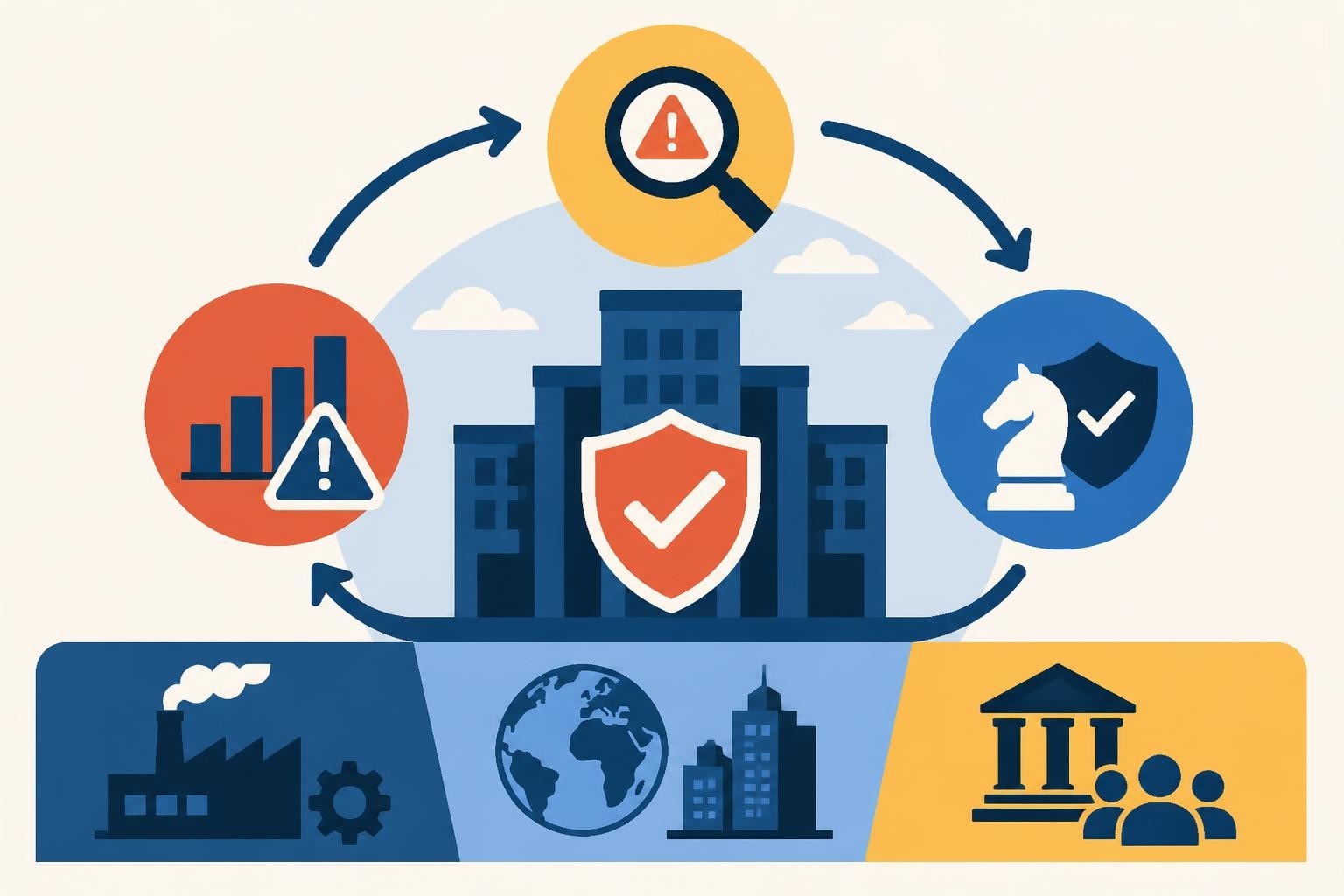
Modern businesses operate in an environment where uncertainty has become the norm rather than the exception. Understanding and managing risk and exposure represents a fundamental competency that separates resilient organizations from those vulnerable to disruption. This discipline extends beyond simple risk identification to encompass comprehensive exposure analysis, strategic mitigation planning, and continuous monitoring across financial, operational, and strategic dimensions. Organizations that develop sophisticated approaches to measuring and controlling their risk and exposure position themselves to capitalize on opportunities while protecting against potential threats that could undermine their financial stability and long-term viability.
Understanding the Dual Nature of Risk and Exposure
Risk represents the potential for loss or negative outcomes stemming from internal processes, external events, or strategic decisions. Exposure, by contrast, measures the magnitude of potential impact if those risks materialize. Together, risk and exposure create a framework for assessing organizational vulnerability.
Financial institutions face particularly complex challenges in this domain. Research on climate risk exposure and bank risk-taking behavior demonstrates how environmental factors now directly influence institutional stability, raising exposure to insolvency and nonperforming loans. This evolution reflects how traditional risk categories continue expanding to encompass emerging threats.
Categories of Business Risk
Organizations encounter multiple risk classifications that require distinct management approaches:
- Market Risk stems from price fluctuations in commodities, currencies, interest rates, and equity positions
- Credit Risk involves counterparty default or deteriorating creditworthiness among customers and partners
- Operational Risk encompasses internal process failures, system breakdowns, and human error
- Liquidity Risk threatens the ability to meet short-term obligations without forced asset sales
- Strategic Risk emerges from competitive pressures, technological disruption, or flawed business decisions
- Regulatory Risk involves changing compliance requirements and legal frameworks
Each category demands specialized assessment methodologies and mitigation strategies tailored to specific exposure profiles.

Measuring and Quantifying Exposure
Effective risk and exposure management requires rigorous quantification methodologies that translate abstract threats into measurable metrics. Organizations must develop standardized approaches for calculating potential impact across different scenarios.
Key Exposure Metrics
| Metric | Purpose | Typical Application |
|---|---|---|
| Value at Risk (VaR) | Maximum expected loss at confidence level | Market exposure, portfolio management |
| Expected Shortfall | Average loss beyond VaR threshold | Tail risk assessment, stress testing |
| Exposure at Default (EAD) | Outstanding amount when counterparty defaults | Credit risk, capital allocation |
| Duration | Sensitivity to interest rate changes | Bond portfolios, fixed income exposure |
| Beta Coefficient | Systematic market risk correlation | Equity exposure, portfolio volatility |
These metrics provide quantitative foundations for comparing disparate risk types and prioritizing mitigation efforts based on materiality.
Advanced organizations layer scenario analysis onto these baseline measurements. Stress testing evaluates how extreme but plausible events would impact financial positions, revealing vulnerabilities that standard metrics might overlook. This approach proved essential during recent economic disruptions when traditional models failed to capture cascading effects across interconnected markets.
Concentration Risk Assessment
Exposure analysis must identify dangerous concentrations that amplify vulnerability. Geographic concentration places excessive reliance on single markets or regions. Customer concentration creates dependency on limited revenue sources. Asset concentration reduces diversification benefits. Product concentration limits strategic flexibility.
Concentration thresholds vary by industry and business model, but general principles apply universally. No single customer should represent more than 15-20% of revenue. Geographic markets should distribute across multiple jurisdictions. Supplier relationships require alternatives to prevent disruption.
The gold industry exemplifies how specialized markets demand tailored concentration analysis. Price exposure to single commodity movements requires sophisticated hedging strategies that balance protection costs against potential losses. Supply chain concentration in specific mining regions introduces geopolitical dimensions to traditional operational risk frameworks.
Strategic Approaches to Risk Mitigation
Identifying and measuring risk and exposure represents only the first phase of effective management. Organizations must implement comprehensive mitigation strategies that reduce vulnerability while preserving operational flexibility and growth potential.
The Risk Mitigation Hierarchy
- Risk Avoidance eliminates exposure by ceasing activities that generate unacceptable threats
- Risk Reduction implements controls and safeguards that decrease probability or impact
- Risk Transfer shifts exposure to third parties through insurance or contractual arrangements
- Risk Retention accepts exposure when mitigation costs exceed potential benefits
Strategic selection among these options requires cost-benefit analysis that considers both direct expenses and opportunity costs. Excessive risk avoidance may sacrifice profitable opportunities. Inadequate risk transfer can leave organizations catastrophically exposed during crisis events.

Hedging and Financial Derivatives
Financial markets provide sophisticated instruments for transferring specific exposures without abandoning underlying business activities. Forward contracts lock in future prices, eliminating uncertainty but sacrificing upside potential. Options preserve favorable outcomes while capping downside risk at the cost of premium payments. Swaps exchange one exposure type for another, transforming risk profiles to match organizational preferences.
Organizations implementing comprehensive financial advisory services recognize that hedging strategy extends beyond instrument selection. Hedge ratios determine what percentage of exposure warrants protection. Timing decisions balance immediate costs against future risk reduction. Documentation requirements ensure hedge accounting treatment aligns with strategic objectives.
Gold industry participants face unique hedging considerations. Producers may lock in selling prices through forward sales, protecting against price declines but limiting participation in rallies. Consumers requiring physical gold for manufacturing or jewelry production take opposite positions, securing purchase prices against inflationary pressures.
Governance Frameworks for Risk Oversight
Effective risk and exposure management demands robust governance structures that embed risk considerations throughout organizational decision-making. Board-level oversight ensures management prioritizes risk control alongside growth objectives.
Three Lines of Defense Model
Modern governance separates risk management responsibilities across distinct organizational layers:
First Line comprises operational management directly responsible for identifying and controlling risks within their business units. They own day-to-day risk decisions and implement approved mitigation strategies.
Second Line includes specialized risk management and compliance functions providing oversight, frameworks, and independent assessment. They develop policies, monitor adherence, and challenge first-line judgments.
Third Line encompasses internal audit delivering independent assurance on risk management effectiveness and governance quality. They evaluate whether first and second lines fulfill their responsibilities appropriately.
This separation prevents conflicts of interest and ensures multiple perspectives inform risk judgments. However, implementation requires clear accountability definitions and communication protocols preventing gaps or duplicated efforts.
Risk Appetite Statements
Organizations must articulate explicit risk appetite defining acceptable exposure levels across different categories. These statements translate abstract risk tolerance into concrete limits guiding operational decisions.
Effective risk appetite frameworks specify:
- Quantitative thresholds for key metrics (maximum VaR, concentration limits, leverage ratios)
- Qualitative principles governing risk-taking culture and acceptable practices
- Authority levels for different exposure decisions
- Escalation procedures when positions approach or exceed limits
- Review frequencies ensuring statements remain current
Financial advisory services help organizations develop risk appetite frameworks aligned with strategic objectives, stakeholder expectations, and competitive positioning. The process forces explicit conversations about tradeoffs between growth ambitions and stability priorities.
Operational Integration of Risk Management
Theoretical frameworks provide limited value unless embedded into daily operations through systematic processes and supporting technology. Risk and exposure management must influence credit decisions, capital allocation, performance evaluation, and strategic planning.
Credit Risk Workflows
Organizations extending credit to customers or counterparties require structured approval processes incorporating exposure analysis. Credit applications trigger financial analysis evaluating repayment capacity. Credit scoring models quantify default probability based on historical patterns and current conditions. Exposure calculations project potential losses under adverse scenarios.
Approval authority should escalate with exposure magnitude. Small transactions proceed with automated approvals based on algorithmic scoring. Moderate exposures require credit officer review and explicit approval. Large exposures demand committee deliberation incorporating multiple perspectives.
Post-approval monitoring tracks changing conditions affecting credit quality. Financial covenant violations, payment delays, or deteriorating business conditions trigger review procedures potentially requiring exposure reduction or enhanced collateral.
Capital Allocation Decisions
Risk-adjusted return metrics ensure capital flows toward opportunities generating adequate returns relative to exposure undertaken. Return on Risk-Adjusted Capital (RORAC) divides net income by allocated risk capital rather than invested capital, revealing whether business lines generate sufficient value given their risk profiles.
This approach prevents low-return activities from consuming excessive capital simply because they appear profitable in absolute terms. High-risk, high-return ventures must demonstrate returns justifying their exposure. Low-risk operations receive credit for capital efficiency even when absolute returns seem modest.
Organizations exploring risk management and capital optimization discover that capital allocation represents among the most impactful applications of exposure analysis. Misallocated capital simultaneously starves promising opportunities and overfunds marginal activities.
Industry-Specific Considerations
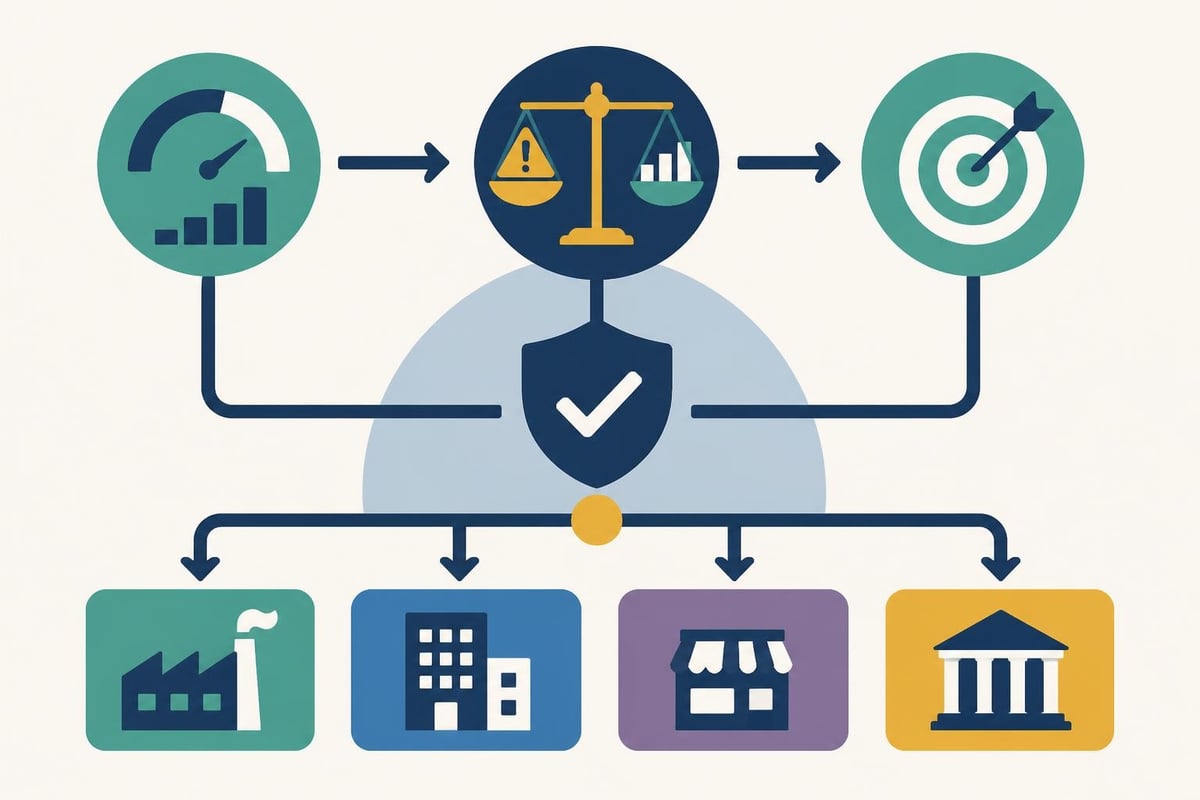
Different sectors face distinctive risk and exposure profiles requiring specialized management approaches. Financial institutions, commodity producers, manufacturers, and service businesses each confront unique challenges demanding tailored frameworks.
Financial Services Risk Landscape
Banks and financial institutions manage risk as their core business function. Their balance sheets consist largely of assumed exposures generating returns through spread margins and fee income. Regulatory capital frameworks mandate minimum capital levels relative to risk-weighted assets, directly linking exposure measurement to operational capacity.
Interest rate risk emerges from maturity mismatches between assets and liabilities. Banks typically fund long-term loans with shorter-term deposits, creating exposure to rising rates that increase funding costs faster than asset yields adjust. Asset-liability management committees continuously monitor duration gaps and implement hedging strategies when exposures exceed tolerance levels.
Commodity Market Exposures
Businesses involved in commodity production, processing, or consumption face price volatility as their predominant risk factor. Gold mining operations experience profit swings as market prices fluctuate while production costs remain relatively stable. Jewelry manufacturers face inverse exposure, benefiting from lower gold prices that reduce input costs.
Physical commodity exposures often combine with currency risk since international markets typically price in US dollars. Non-US participants face compound exposure requiring multi-layered hedging strategies addressing both commodity and foreign exchange dimensions.
Understanding risk relationships and correlations proves essential for commodity-dependent businesses. Hedging programs must account for basis risk when futures contracts imperfectly correlate with physical exposures. Cross-hedging introduces additional complexity when exact matching instruments don't exist.
Technology and Data Analytics in Risk Management
Modern risk and exposure management increasingly relies on advanced analytics and technology platforms that process vast data volumes, identify patterns, and generate insights impossible through manual analysis.
Predictive Analytics Applications
Machine learning algorithms detect early warning signals predicting credit deterioration, fraud attempts, or operational failures. These models analyze hundreds of variables simultaneously, identifying subtle pattern combinations that escape human observers.
Predictive capabilities extend across multiple domains:
- Credit scoring incorporating alternative data sources beyond traditional financial statements
- Transaction monitoring flagging unusual patterns suggesting fraud or money laundering
- Supply chain disruption prediction based on geopolitical developments and weather patterns
- Market regime detection identifying transitions between stable and volatile periods
However, model risk represents an emerging exposure category itself. Flawed assumptions, inadequate data, or inappropriate applications can generate misleading results that encourage poor decisions. Model validation and ongoing performance monitoring ensure analytical tools enhance rather than undermine risk management quality.
Real-Time Exposure Monitoring
Legacy risk management operated on delayed information, with exposure reports reflecting positions from days or weeks earlier. Modern platforms provide real-time visibility into current exposures, enabling rapid response to changing conditions.
Dashboard technologies aggregate data from multiple source systems, presenting unified views of enterprise-wide risk and exposure profiles. Drill-down capabilities allow users to investigate summary figures, tracing exposures to underlying transactions and counterparties. Alert mechanisms notify relevant personnel when positions approach limits or unusual patterns emerge.
This technological evolution transforms risk management from periodic review process to continuous oversight discipline. Organizations detect and address emerging issues before they evolve into significant problems.
Building Organizational Risk Culture
Technical frameworks and sophisticated tools deliver limited value without supportive organizational culture that values risk awareness and encourages appropriate challenge. Risk culture encompasses shared beliefs, attitudes, and behaviors regarding risk-taking and control.
Cultural Attributes of Risk-Aware Organizations
Strong risk cultures exhibit several common characteristics distinguishing them from organizations where risk management exists only on paper:
Transparency allows bad news to flow upward without fear of punishment for messengers. Problems surface quickly rather than festering until they become crises.
Accountability ensures individuals face consequences for risk decisions, creating incentives for careful judgment. Both excessive risk-taking and paralysis that prevents reasonable opportunities generate performance impacts.
Competence development provides training enabling employees to recognize and evaluate risks within their responsibilities. Risk literacy extends throughout the organization rather than concentrating in specialized functions.
Challenge encourages questioning assumptions and proposals even when they originate from senior leaders. Psychological safety permits dissenting views without career repercussions.
Organizations seeking to understand financial advisory costs and value should recognize that cultural transformation often represents the highest-value component of risk management enhancement. Technical improvements generate incremental benefits, while cultural shifts unlock exponential improvements in risk outcomes.
Incentive Alignment
Compensation structures powerfully shape risk-taking behavior. Short-term bonus programs rewarding immediate results regardless of embedded risks encourage excessive exposure. Multi-year performance measurements and clawback provisions aligning rewards with sustainable outcomes promote prudent judgment.
Balanced scorecards incorporating both performance and risk metrics ensure employees don't sacrifice long-term stability for short-term gains. Risk-adjusted performance measures reveal whether results justify exposures undertaken to achieve them.
Regulatory Compliance and Risk Reporting
Organizations in regulated industries face mandatory risk and exposure reporting obligations beyond internal management needs. Financial institutions submit detailed regulatory capital calculations, stress test results, and exposure concentration reports. Public companies disclose material risks in securities filings.
Regulatory Capital Frameworks
Basel III standards govern bank capital adequacy, establishing minimum ratios between capital and risk-weighted assets. Different asset categories receive risk weights reflecting their loss potential. Cash and government securities receive 0% weights. Corporate loans typically receive 100% weights. Higher-risk exposures receive proportionally higher weights.
Banks must maintain Common Equity Tier 1 capital exceeding 4.5% of risk-weighted assets, with additional buffers for systemically important institutions. These requirements directly link risk and exposure measurement to operational capacity, since inadequate capital relative to exposures restricts growth opportunities.
Risk Disclosure Requirements
Securities regulations mandate that public companies disclose material risks that reasonable investors would consider important. Annual reports include extensive risk factor sections describing potential threats to business performance and financial condition.
Effective risk disclosure balances transparency with competitive sensitivity. Overly generic boilerplate language fails to inform investors meaningfully. Excessively specific disclosures may reveal strategic vulnerabilities to competitors. Organizations should describe risk categories clearly while avoiding unnecessary detail about mitigation approaches that could compromise competitive advantages.
Emerging Risk Categories in 2026
The risk landscape continuously evolves as new threats emerge and existing categories transform. Organizations must maintain awareness of developing exposures that historical data and traditional frameworks may inadequately capture.
Climate and Environmental Risks
Physical risks from extreme weather, rising temperatures, and changing precipitation patterns now affect businesses across all sectors. Supply chain disruptions, property damage, and agricultural volatility create direct financial impacts. Transition risks emerge as regulatory requirements, technological changes, and consumer preferences shift toward lower-carbon alternatives.
Financial institutions face both direct exposures to climate-related losses and indirect exposures through their lending portfolios. Research examining climate risk exposure and bank behavior reveals how environmental factors raise insolvency risk and influence institutional risk-taking patterns.
Cybersecurity Exposures
Digital transformation creates expanding attack surfaces vulnerable to data breaches, ransomware, and system compromises. Cyber risk and exposure extend beyond technology departments to encompass enterprise-wide implications including reputation damage, regulatory penalties, and operational disruption.
Traditional insurance models struggle to price cyber exposures given limited historical data and rapidly evolving threat landscapes. Organizations increasingly retain significant cyber risk, making prevention and resilience investments critical for exposure management.
Geopolitical Uncertainty
Trade tensions, sanctions regimes, and political instability create unpredictable operating environments for multinational organizations. Supply chain dependencies crossing hostile borders become vulnerabilities. Currency controls and capital restrictions strand assets in inaccessible jurisdictions.
Scenario planning helps organizations prepare for geopolitical disruptions by identifying potential triggers, evaluating impacts, and developing contingency responses. While specific events remain unpredictable, systematic preparation reduces reaction time and improves decision quality during crises.
Effective management of risk and exposure separates resilient organizations from those vulnerable to disruption, requiring comprehensive frameworks spanning measurement, mitigation, governance, and culture. Organizations that develop sophisticated capabilities in these domains position themselves to pursue growth opportunities while maintaining financial stability through uncertain conditions. AurumCrest Advisory brings over 30 years of specialized expertise helping businesses enhance their risk management capabilities, strengthen lender relationships, and build lasting financial resilience through practical strategies tailored to their unique circumstances and challenges.