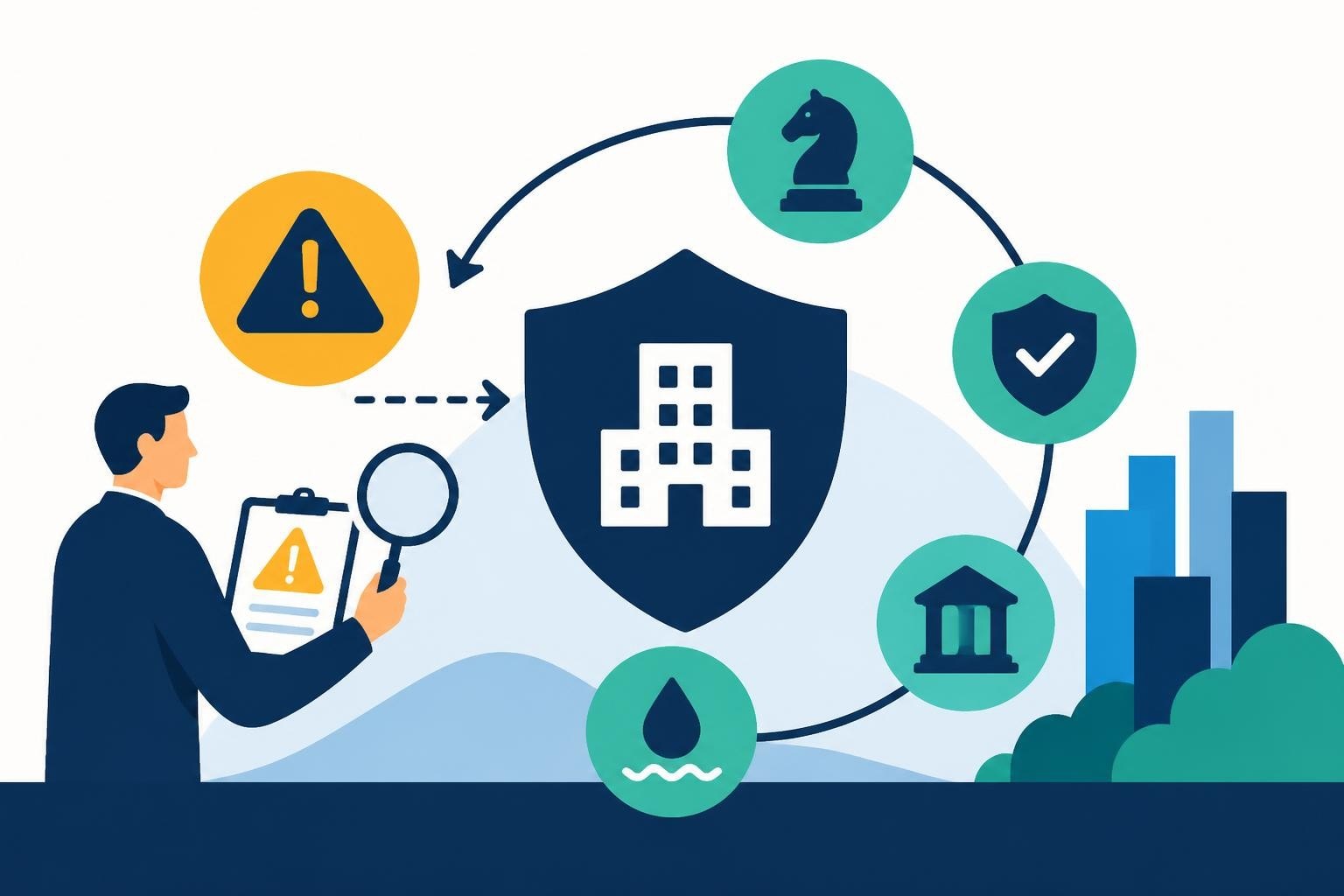
In today's volatile economic landscape, organizations face unprecedented challenges that test their ability to withstand shocks and sustain operations. The relationship between resilience and risk has never been more critical for corporate finance professionals and business leaders. Understanding how these two concepts intersect and complement each other forms the foundation of sustainable business strategy. While risk management focuses on identifying, assessing, and mitigating potential threats, resilience represents the organizational capacity to absorb disruptions, adapt to change, and emerge stronger. Together, they create a comprehensive framework that enables companies to navigate uncertainty while maintaining financial stability and competitive advantage.
Understanding the Fundamental Connection Between Resilience and Risk
The relationship between resilience and risk operates as a continuous feedback loop within organizational systems. Risk analysis and assessment frameworks provide the diagnostic tools necessary to identify vulnerabilities, while resilience building creates the adaptive capacity to respond effectively when those risks materialize.
Financial institutions and corporate entities must recognize that these concepts are not opposing forces but complementary elements of a holistic management approach. Risk identification reveals where organizations are exposed, while resilience determines how well they can withstand and recover from those exposures.
The Evolution of Corporate Risk Perspectives
Traditional risk management focused primarily on prevention and mitigation, attempting to eliminate threats before they could impact operations. This approach, while valuable, proved insufficient in addressing complex, interconnected challenges that characterize modern business environments.
Modern resilience and risk frameworks incorporate:
- Dynamic assessment methodologies that account for rapidly changing conditions
- Scenario planning that extends beyond historical data patterns
- Integrated stress testing across multiple operational dimensions
- Continuous monitoring systems that provide real-time threat intelligence
- Adaptive governance structures that enable rapid decision-making
Organizations that embrace this evolution move from reactive crisis management to proactive resilience building. They develop the capacity not merely to survive disruptions but to capitalize on opportunities that emerge during periods of change.
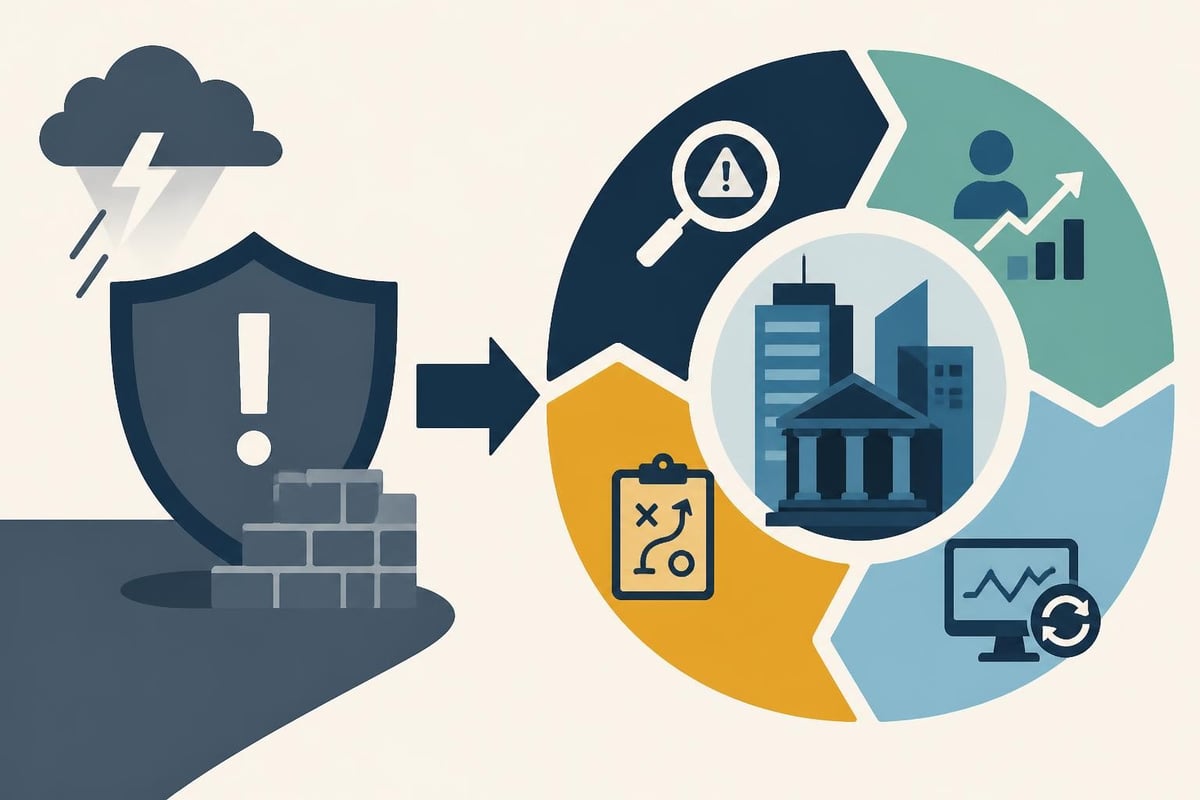
Building Financial Resilience Through Strategic Risk Assessment
Financial resilience represents more than maintaining adequate capital reserves. It encompasses the entire spectrum of organizational capabilities that enable sustained operations through adverse conditions. Understanding vulnerability and risk relationships helps finance leaders identify where strengthening efforts deliver maximum impact.
Liquidity Management as a Resilience Foundation
Liquidity serves as the first line of defense against financial shocks. Companies with robust liquidity positions can weather revenue disruptions, unexpected expenses, and market downturns without compromising strategic initiatives or operational integrity.
| Liquidity Metric | Baseline Target | Resilient Target | Strategic Benefit |
|---|---|---|---|
| Current Ratio | 1.5:1 | 2.0:1 | Enhanced short-term flexibility |
| Quick Ratio | 1.0:1 | 1.3:1 | Improved immediate response capability |
| Cash Conversion Cycle | 60 days | 45 days | Accelerated working capital efficiency |
| Operating Cash Reserve | 30 days | 90 days | Extended runway during disruptions |
These targets represent starting points rather than universal standards. Each organization must calibrate its liquidity strategy based on industry dynamics, operational volatility, and strategic objectives.
Diversification Strategies That Enhance Resilience
Revenue concentration creates vulnerability. Companies heavily dependent on single customers, markets, or product lines face elevated risk when those sources experience disruption. Strategic diversification builds resilience by spreading exposure across multiple income streams.
Effective diversification approaches include:
- Geographic expansion that reduces dependence on single regional economies
- Product portfolio development that addresses multiple market segments
- Customer base broadening that eliminates concentration risk
- Supplier relationship diversification that prevents supply chain bottlenecks
- Funding source variety that ensures capital access under different conditions
The gold industry exemplifies how diversification enhances resilience. Mining companies that operate across multiple jurisdictions, maintain diverse customer relationships, and access various capital markets demonstrate superior resilience compared to those with concentrated exposures.
Governance Frameworks That Integrate Resilience and Risk
Effective governance provides the structural foundation for managing resilience and risk in concert. Risk science offers integrated approaches that enable boards and management teams to oversee these critical functions comprehensively.
Board-Level Risk Oversight
Board committees responsible for risk oversight must expand their mandate beyond compliance and audit functions. Modern risk governance encompasses strategic resilience, operational continuity, and adaptive capacity building.
Directors should regularly evaluate:
- Enterprise risk profiles that identify and quantify major exposures
- Resilience indicators that measure organizational adaptive capacity
- Scenario outcomes that test strategy robustness under stress conditions
- Recovery capabilities that assess bounce-back potential after disruptions
- Resource allocation that balances prevention with resilience building
This comprehensive oversight ensures that resilience and risk considerations influence strategic decisions rather than operating as separate compliance exercises.

Management Systems for Operational Resilience
While boards provide strategic oversight, management teams implement the systems and processes that operationalize resilience and risk management. These systems must balance standardization with flexibility, creating consistent frameworks while enabling rapid adaptation.
| System Component | Risk Function | Resilience Function | Integration Point |
|---|---|---|---|
| Early Warning Indicators | Threat detection | Response trigger | Automated escalation protocols |
| Contingency Planning | Scenario preparation | Alternative pathway development | Cross-functional coordination |
| Resource Allocation | Loss prevention investment | Capacity building investment | Portfolio optimization |
| Performance Metrics | Risk reduction tracking | Recovery speed measurement | Balanced scorecard integration |
Organizations excel when these systems communicate seamlessly, sharing data and insights that inform both risk mitigation and resilience enhancement initiatives.
Practical Implementation Strategies for Finance Leaders
Translating resilience and risk concepts into actionable initiatives requires systematic implementation approaches. Finance leaders must balance theoretical frameworks with practical execution that delivers measurable improvements.
Stress Testing and Scenario Analysis
Rigorous stress testing reveals how organizations perform under adverse conditions. Unlike compliance-driven exercises that fulfill regulatory requirements, strategic stress testing explores a wide range of scenarios that challenge assumptions and expose hidden vulnerabilities.
Comprehensive stress testing programs evaluate:
- Revenue shocks from customer loss, market contraction, or competitive disruption
- Cost spikes driven by input price volatility, regulatory changes, or operational failures
- Liquidity constraints emerging from credit market disruptions or working capital deterioration
- Operational interruptions caused by supply chain breaks, technology failures, or workforce challenges
- Strategic risks including market shifts, technology disruption, or competitive threats
Results from these exercises should directly inform resource allocation decisions, strategic planning processes, and capability development priorities. Organizations that treat stress testing as learning opportunities rather than compliance obligations build superior resilience.
Lender Readiness and Covenant Management
Maintaining strong banking relationships and covenant compliance creates financial flexibility that proves invaluable during challenging periods. Lender readiness extends beyond meeting minimum requirements to building credibility that enables access to capital under stress conditions.
Finance teams should proactively:
- Monitor covenant ratios with early warning triggers well before violation thresholds
- Communicate regularly with lenders about performance, strategy, and market conditions
- Maintain documentation that demonstrates sound governance and risk management
- Develop contingency funding alternatives that activate if primary sources become constrained
- Build relationship depth through transparency and consistent engagement
These practices transform banking relationships from transactional necessities into strategic assets that enhance organizational resilience. AurumCrest Advisory specializes in helping companies develop and maintain this critical lender readiness capability.
Industry-Specific Considerations for Gold and Commodity Sectors
The gold industry faces unique challenges that require specialized approaches to resilience and risk management. Price volatility, geopolitical exposure, operational complexity, and regulatory scrutiny create a risk landscape distinct from other sectors.
Price Risk and Hedging Strategies
Gold price volatility represents both opportunity and threat. Mining companies, refiners, and traders must balance price exposure management with maintaining upside participation.
Effective hedging strategies consider:
- Production timelines and delivery obligations
- Cost structures and breakeven prices
- Market conditions and contango/backwardation dynamics
- Counterparty credit quality and relationship strength
- Tax implications and accounting treatment
Resilience emerges not from eliminating price exposure entirely but from maintaining flexibility to adjust positions as conditions evolve. Companies that lock in excessive hedges during low-price environments may sacrifice significant value when markets recover.
Operational Risk in Complex Environments
Gold mining operations frequently occur in challenging jurisdictions with elevated political, social, and environmental risks. Building operational resilience requires deep understanding of local contexts and proactive stakeholder engagement.
| Risk Category | Management Approach | Resilience Building | Outcome Metric |
|---|---|---|---|
| Political Risk | Government relations programs | License diversification | Operational continuity rate |
| Social Risk | Community investment initiatives | Local employment development | Stakeholder satisfaction scores |
| Environmental Risk | Compliance excellence | Beyond-compliance practices | Incident frequency reduction |
| Infrastructure Risk | Maintenance optimization | Redundancy development | Uptime percentage |
These integrated approaches recognize that resilience and risk management succeed when they address root causes rather than merely treating symptoms.

Measuring and Monitoring Resilience Effectiveness
Quantifying resilience presents challenges distinct from traditional risk metrics. While risk can often be measured through probability and impact assessments, resilience requires indicators that capture adaptive capacity, recovery speed, and sustained performance under stress.
Key Performance Indicators for Resilience
Organizations need balanced scorecards that track both risk reduction and resilience enhancement. Research on quantifying resilience provides methodological frameworks that finance leaders can adapt to their specific contexts.
Critical resilience metrics include:
- Recovery time objectives measuring how quickly normal operations resume after disruptions
- Financial flexibility ratios indicating capacity to deploy resources rapidly
- Supplier redundancy scores quantifying alternative sourcing options
- Workforce adaptability indicators assessing talent versatility and cross-training
- Innovation capacity measures tracking ability to develop new solutions under pressure
These metrics should complement traditional risk indicators rather than replace them. Together, they provide comprehensive visibility into organizational health and sustainability.
Continuous Improvement Cycles
Resilience and risk management require ongoing refinement as internal capabilities evolve and external conditions change. Organizations should implement structured review cycles that systematically evaluate performance, capture lessons, and adjust approaches.
Quarterly reviews should assess:
- Indicator trends showing whether resilience and risk metrics are improving or deteriorating
- Near-miss analysis examining close calls that reveal hidden vulnerabilities
- Benchmark comparisons evaluating performance relative to industry peers
- Capability gaps identifying areas requiring investment or development
- Strategic alignment ensuring resilience initiatives support business objectives
This discipline of continuous improvement transforms resilience and risk management from static programs into dynamic capabilities that strengthen over time.
Advanced Frameworks for Integrated Management
Leading organizations are moving beyond treating resilience and risk as separate functions, instead developing integrated frameworks that recognize their interdependence. Understanding how vulnerability shapes risk exposure informs this integration.
The Resilience-Risk Matrix
Finance leaders can use matrix frameworks to visualize how different organizational elements contribute to both risk exposure and resilience capacity. This visualization enables strategic resource allocation that optimizes overall organizational strength.
| Business Element | Risk Exposure Level | Resilience Capacity | Priority Action |
|---|---|---|---|
| Core Revenue Stream | High | Medium | Enhance diversification |
| Technology Infrastructure | Medium | High | Maintain current investment |
| Supply Chain | High | Low | Urgent resilience building |
| Talent Pipeline | Low | Medium | Monitor and sustain |
| Banking Relationships | Medium | High | Leverage as strategic asset |
This framework moves beyond simple risk ratings to incorporate resilience dimensions, creating more nuanced and actionable insights.
Dynamic Capability Development
Static resilience quickly becomes obsolete as conditions evolve. Organizations must develop dynamic capabilities that enable continuous adaptation and learning. These capabilities include:
- Environmental scanning systems that detect emerging threats and opportunities early
- Rapid experimentation processes that test new approaches quickly and safely
- Knowledge management platforms that capture and disseminate lessons across the organization
- Cross-functional collaboration mechanisms that break down silos during crisis response
- Leadership development programs that build adaptive thinking at all organizational levels
Finance functions play central roles in enabling these capabilities through resource allocation, performance measurement, and strategic planning integration.
Strategic Investment in Resilience Capabilities
Building resilience requires capital allocation decisions that balance immediate returns with long-term sustainability. Finance leaders must develop business cases that justify resilience investments even when direct ROI calculations prove challenging.
Quantifying the Value of Resilience
While resilience benefits may seem intangible, sophisticated analysis can quantify their value through several approaches:
Avoided loss calculations estimate the financial impact of disruptions prevented or minimized through resilience capabilities. These calculations should consider both high-probability, low-impact events and low-probability, high-impact scenarios.
Option value frameworks recognize that resilience creates flexibility to pursue opportunities or avoid threats as conditions evolve. This flexibility has measurable value similar to financial options.
Competitive advantage assessments evaluate how superior resilience enables market share gains, customer retention, or premium pricing when competitors struggle during disruptions.
Together, these methodologies build compelling cases for resilience investments that might otherwise face skepticism in traditional capital allocation processes.
Portfolio Optimization Across Risk and Resilience
Organizations have finite resources to allocate between risk reduction and resilience building. Optimal portfolios balance these investments based on expected returns, recognizing that some risks are better mitigated while others require resilience responses.
Allocation frameworks consider:
- Mitigation cost-effectiveness for preventable risks with clear intervention pathways
- Resilience necessity for unpreventable or high-uncertainty threats
- Time horizons distinguishing between immediate and long-term investments
- Synergy opportunities where single initiatives deliver both risk reduction and resilience enhancement
- Strategic priorities ensuring alignment with overall business objectives
This portfolio approach ensures that resilience and risk investments work in concert rather than competing for resources.
Understanding the intricate relationship between resilience and risk enables finance leaders to build organizations capable of thriving through uncertainty and disruption. By implementing integrated frameworks, measuring performance systematically, and investing strategically in both risk mitigation and resilience capabilities, companies create sustainable competitive advantages. AurumCrest Advisory brings over 30 years of experience helping organizations develop practical solutions that enhance financial resilience while managing risk effectively, combining strategic thinking with proven execution to strengthen liquidity, governance, and long-term sustainability.