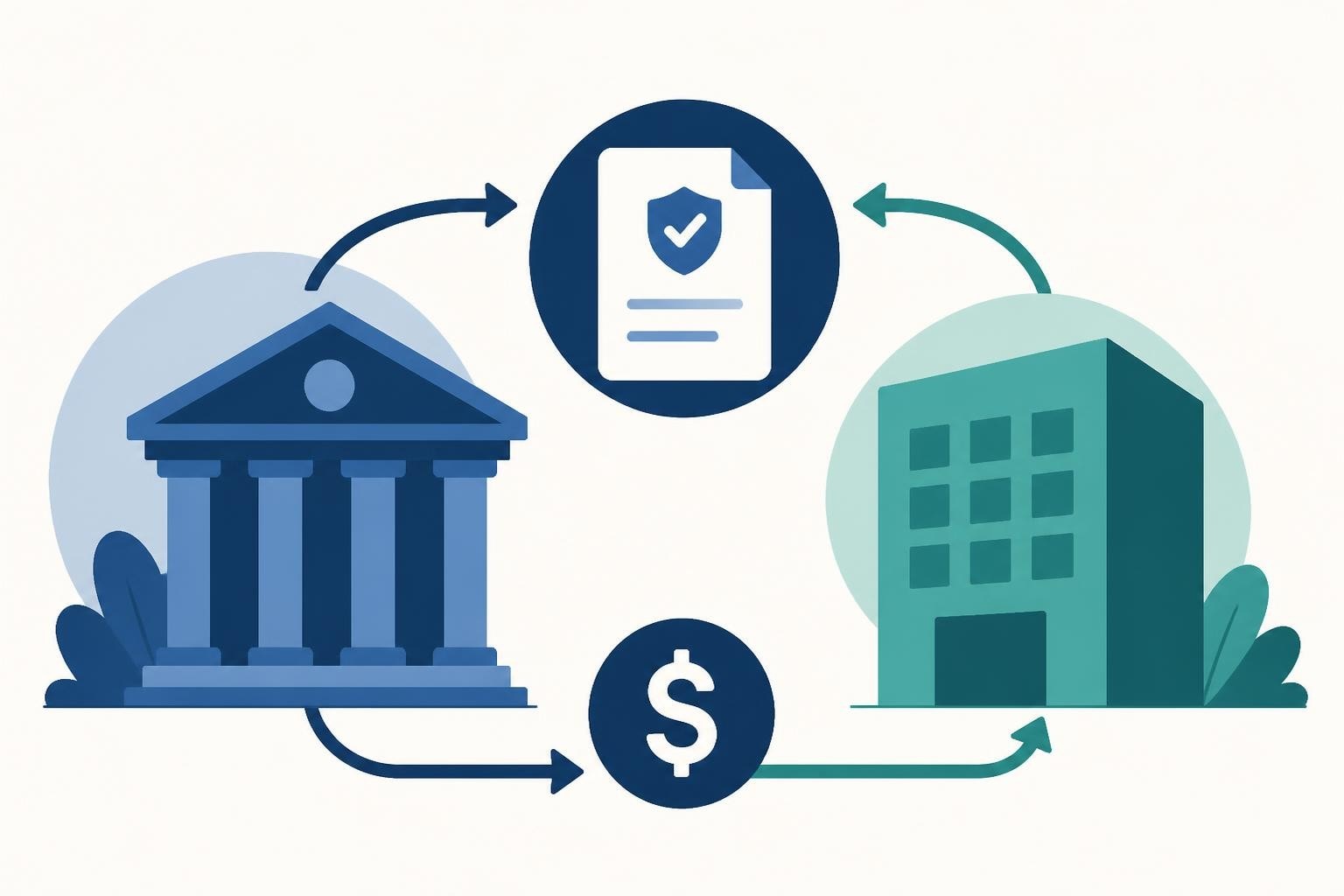
The financial landscape continues to evolve, bringing new opportunities and challenges for companies seeking capital to fuel growth and manage liquidity. Among the various financing mechanisms available, lender finance has emerged as a critical tool for specialty finance companies and non-bank lenders who need access to substantial capital to support their own lending activities. This specialized form of financing enables lenders to leverage their loan portfolios, creating additional capacity to originate new business while maintaining healthy balance sheets. Understanding the mechanics, benefits, and strategic considerations of lender finance has become essential for financial institutions navigating today's complex credit markets.
Understanding the Fundamentals of Lender Finance
Lender finance represents a sophisticated capital solution designed specifically for companies in the lending business. Unlike traditional commercial financing, lender finance provides funding to specialty finance companies based on their underlying loan portfolios, creating a revolving source of capital that scales with business volume.
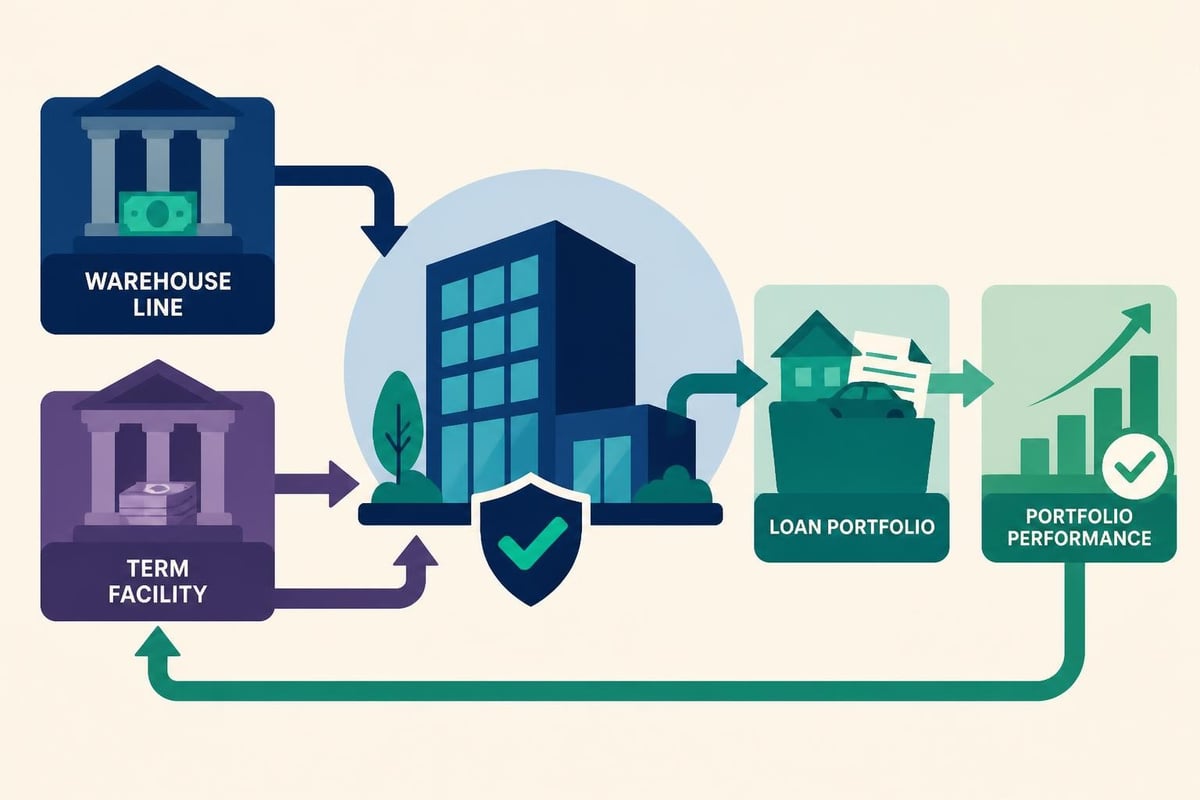
At its core, this financing mechanism allows non-bank lenders to access institutional capital markets without being traditional banks. The structure typically involves a credit facility where the lender's existing loans serve as collateral, providing security to the capital provider while giving the borrower flexibility to manage their lending operations.
Key Structural Components
Warehouse Lines form the foundation of many lender finance arrangements. These revolving facilities allow specialty lenders to originate loans before packaging them for sale or long-term financing. The warehouse period provides crucial breathing room for lenders to build scale and optimize portfolio composition.
Term Facilities offer longer-duration capital for lenders who prefer to hold loans on their balance sheets. These structures align with the lifecycle of the underlying assets, whether those are consumer installment loans, commercial receivables, or equipment financing contracts.
The collateral package typically includes:
- Outstanding loan receivables and principal balances
- Associated security interests and documentation
- Payment rights and collection authority
- Servicing rights and operational controls
- Reserve accounts and cash collections
Market Dynamics Shaping Lender Finance in 2026
The lender finance sector has experienced notable shifts throughout 2025 and into 2026, driven by broader economic conditions and evolving lender priorities. Recent analysis of the lender finance state reveals that capital providers are increasingly focused on borrower quality, operational transparency, and risk management capabilities.
Interest rate environments significantly impact lender finance availability and pricing. As we navigate 2026, the relationship between base rates, credit spreads, and portfolio yields creates both opportunities and constraints for specialty lenders seeking capital.
Portfolio Performance Metrics
| Metric | Typical Range | Impact on Facility Terms |
|---|---|---|
| Delinquency Rate | 2-5% | Direct pricing adjustment |
| Net Charge-offs | 1-3% annually | Advance rate determination |
| Portfolio Yield | 8-18% | Covenant flexibility |
| Concentration Limits | Varies by sector | Borrowing base calculation |
Capital providers scrutinize these metrics continuously, adjusting terms and availability based on performance trends. Lenders seeking optimal facility terms must demonstrate consistent operational excellence and proactive risk management.
Strategic Benefits for Specialty Finance Companies
Accessing lender finance delivers multiple strategic advantages beyond simple capital availability. For companies operating in competitive lending markets, these facilities provide the financial horsepower necessary to capture opportunities quickly and efficiently.
Leverage and Returns: By financing loan portfolios through dedicated facilities, specialty lenders can achieve higher returns on equity than would be possible using only balance sheet capital. This leverage amplifies performance during favorable market conditions while requiring careful risk monitoring.
Market Responsiveness becomes significantly enhanced when lenders maintain access to scalable capital. Rather than turning away qualified borrowers due to capital constraints, companies with robust lender finance facilities can respond immediately to market demand.
The operational benefits extend across multiple dimensions:
- Predictable capital costs through structured pricing mechanisms
- Reduced dependency on volatile equity markets for growth capital
- Enhanced credibility with business partners and customers
- Improved matching between asset and liability durations
- Greater flexibility in portfolio management and optimization
Navigating Credit Facility Negotiations
Securing favorable lender finance terms requires thorough preparation and strategic thinking. Capital providers evaluate potential borrowers across numerous dimensions, making comprehensive readiness essential for successful negotiations.

Documentation Requirements
Financial institutions seeking lender finance must assemble extensive documentation packages demonstrating operational capability and financial stability. Historical performance data, underwriting policies, collection procedures, and compliance frameworks all receive careful scrutiny during the due diligence process.
Operational transparency has become increasingly important as capital providers seek to understand not just portfolio performance but the systems and controls generating those results. Companies that can articulate clear processes and demonstrate robust operational infrastructure typically secure more favorable terms.
The negotiation landscape includes several critical elements:
- Advance rates determining how much capital is available against portfolio value
- Interest rate structures including base rates, spreads, and adjustment mechanisms
- Covenants and reporting requirements establishing ongoing performance standards
- Events of default and remediation procedures
- Term lengths and renewal provisions
Industry-Specific Applications and Considerations
Different lending sectors utilize lender finance in distinct ways, reflecting the unique characteristics of their underlying assets and borrower relationships. Understanding these variations helps specialty lenders structure optimal facilities for their specific business models.
Asset-Based Lending Applications
Companies engaged in commercial asset-based lending have seen strong market conditions, with syndicated ABL finishing 2025 on a high note despite some market unevenness. These lenders typically use warehouse facilities to support their commercial lending activities, with facility terms reflecting the shorter-duration nature of their receivables portfolios.
Consumer Finance Sectors including automotive, personal installment, and point-of-sale lending represent another major category. The growth in automotive refinancing, which increased nearly 70% year-over-year, demonstrates the dynamic nature of consumer credit markets and the capital requirements this growth creates.
| Lending Sector | Typical Advance Rate | Average Facility Term | Key Risk Factors |
|---|---|---|---|
| Commercial ABL | 75-85% | 2-3 years | Borrower concentration |
| Auto Finance | 80-90% | 18-24 months | Collateral depreciation |
| Equipment Leasing | 70-80% | 3-5 years | Technology obsolescence |
| Consumer Installment | 75-85% | 2-3 years | Credit quality shifts |
Real Estate and Mortgage Applications
Mortgage market trends through Q3 2025 show evolving dynamics in securitization volumes and lender profitability, creating both opportunities and challenges for non-bank mortgage lenders utilizing warehouse facilities. These companies rely heavily on lender finance to bridge the gap between loan origination and eventual sale to secondary market participants.
The commercial real estate sector has experienced its own evolution, with debt market stabilization signaling lending recovery as conditions normalize following period of volatility. CRE lenders accessing lender finance facilities must navigate property type preferences, geographic considerations, and loan-to-value sensitivities.
Risk Management and Operational Excellence
Maintaining access to lender finance facilities requires ongoing attention to risk management and operational performance. Capital providers monitor borrower performance closely, with deteriorating metrics potentially triggering reduced availability or facility termination.

Portfolio diversification serves as a fundamental risk mitigation strategy. Lenders who concentrate too heavily in specific geographies, borrower types, or industry sectors face greater volatility and potentially restrictive facility terms. Thoughtful portfolio construction balances growth objectives with risk dispersion.
Operational Control Requirements
Capital providers expect sophisticated operational capabilities from their lender finance borrowers. These requirements extend beyond basic accounting systems to encompass:
- Real-time portfolio monitoring and reporting platforms
- Automated borrowing base certificate generation
- Integrated collection and payment processing systems
- Compliance tracking and audit trail documentation
- Exception management and escalation procedures
Companies lacking these capabilities may find themselves at a competitive disadvantage when seeking lender finance or negotiating facility renewals. Investment in operational infrastructure pays dividends through improved facility terms and enhanced scalability.
Middle Market Dynamics and Pricing Trends
The middle market lending environment continues evolving, with Q3 2025 showing repricing waves and yield landscape shifts that impact both borrowers and lenders. For specialty finance companies serving middle market businesses, these trends directly affect both sides of their balance sheet.
Pricing for lender finance facilities reflects multiple factors including base rate environments, credit spreads, competitive dynamics, and portfolio characteristics. Throughout 2026, lenders should anticipate continued attention to pricing structures that align incentives between capital providers and specialty finance companies.
Covenant structures have become more sophisticated, moving beyond simple financial ratios to include operational metrics and portfolio quality thresholds. Forward-looking lenders view these covenants not as restrictions but as early warning systems that facilitate proactive management.
Alternative Structures and Emerging Models
While traditional lender finance facilities dominate the landscape, alternative structures continue emerging to address specific needs and market gaps. Seller financing trends through 2025 illustrate how creative capital solutions develop in response to market conditions and borrower requirements.
Hybrid facilities combining warehouse lines with term debt create flexibility for lenders managing portfolios with mixed hold and sale strategies. These structures acknowledge that specialty finance companies often maintain portions of their originations while selling others, requiring capital solutions that accommodate both approaches.
Innovation in lender finance continues across several dimensions:
- Technology-enabled underwriting and monitoring systems
- Performance-based pricing adjustments rewarding strong execution
- Sector-specific facilities tailored to unique asset characteristics
- Partnership structures blending capital provision with operational support
- ESG-linked facility terms reflecting sustainability commitments
Preparing for Future Market Conditions
Looking ahead through 2026 and beyond, specialty lenders must position themselves to navigate evolving market conditions while maintaining reliable access to lender finance. This preparation involves both defensive measures protecting against downside scenarios and offensive strategies capitalizing on opportunities.
Scenario planning becomes essential when economic uncertainty persists. Lenders should model various economic conditions, understanding how different scenarios would affect portfolio performance, facility availability, and capital costs. This analysis informs strategic decisions about growth pacing, portfolio composition, and capital structure.
The relationship between lender finance availability and broader economic conditions creates both challenges and opportunities. Companies that demonstrate resilience through various market cycles earn trust from capital providers, translating into better terms and more reliable access during stressed periods.
Building strong relationships with multiple capital providers creates optionality and reduces dependency on any single facility. While maintaining numerous relationships requires additional effort, the strategic value during refinancing periods or market disruptions justifies this investment.
Understanding lender finance dynamics and maintaining strong operational capabilities positions specialty finance companies for sustainable growth and market leadership. Whether you're navigating facility negotiations, optimizing existing arrangements, or preparing for future capital needs, having experienced advisors who understand both the technical requirements and strategic implications makes the critical difference. AurumCrest Advisory brings over three decades of corporate finance expertise to help specialty lenders enhance their liquidity positions, strengthen lender relationships, and build the operational frameworks that capital providers value. Our practical approach combines strategic thinking with hands-on execution, ensuring you're positioned for long-term financial resilience and competitive advantage.