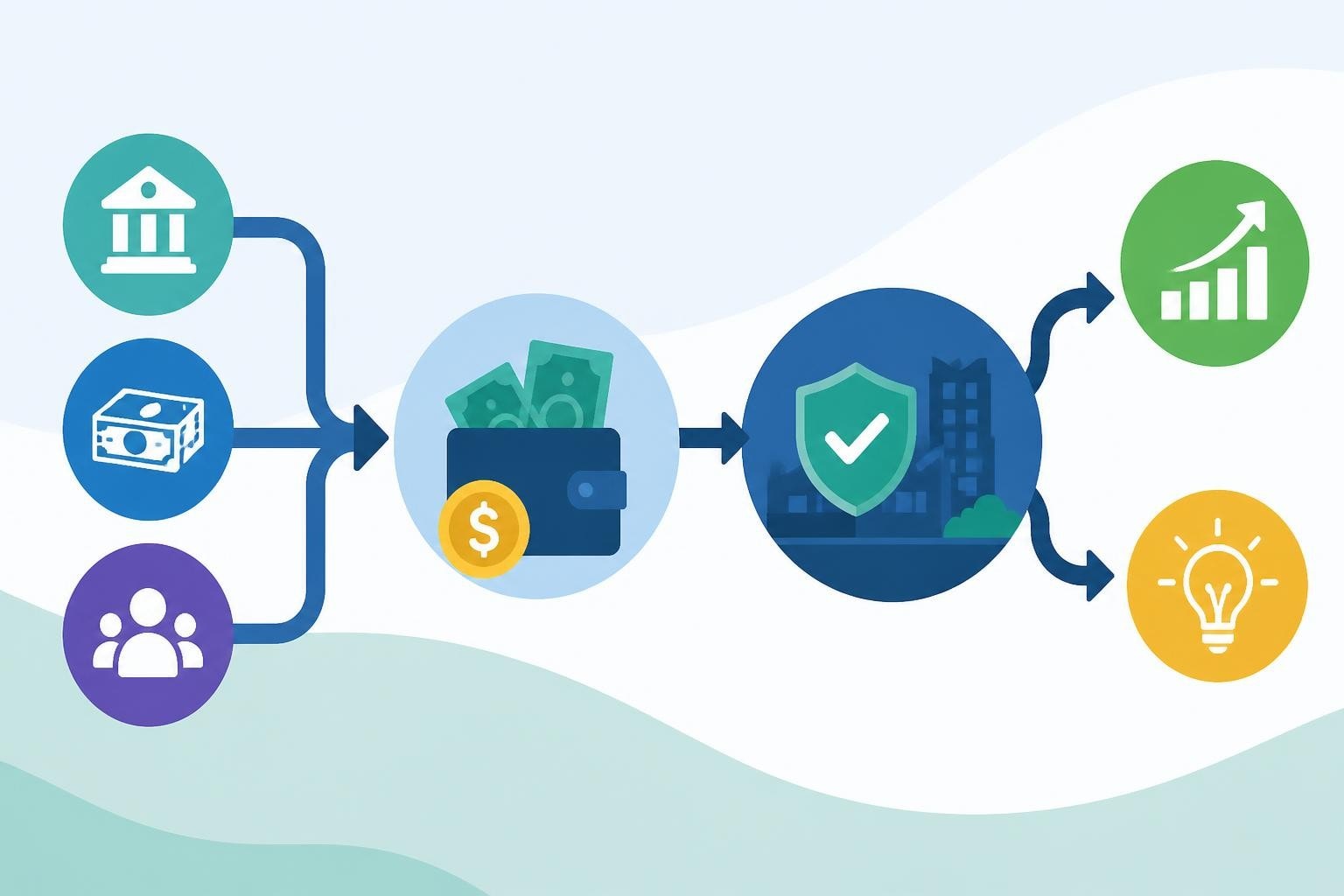
Cash funding represents one of the most fundamental yet versatile approaches businesses use to secure immediate liquidity for operations, expansion, and strategic initiatives. Unlike equity financing that dilutes ownership or traditional term loans with rigid structures, cash funding provides flexible capital access when businesses need it most. Understanding the full spectrum of cash funding mechanisms, their strategic applications, and potential implications allows companies to make informed decisions that strengthen financial resilience while maintaining control over their operations.
Understanding Cash Funding Mechanisms
Cash funding encompasses various financial instruments designed to provide businesses with immediate access to working capital. These mechanisms range from traditional bank products to alternative financing solutions that have emerged in response to changing market demands.
The core principle behind cash funding is straightforward: businesses receive liquid capital they can deploy immediately for operational needs, growth opportunities, or temporary cash flow gaps. However, the structures, costs, and strategic implications vary significantly across different funding types.
Traditional Cash Funding Sources
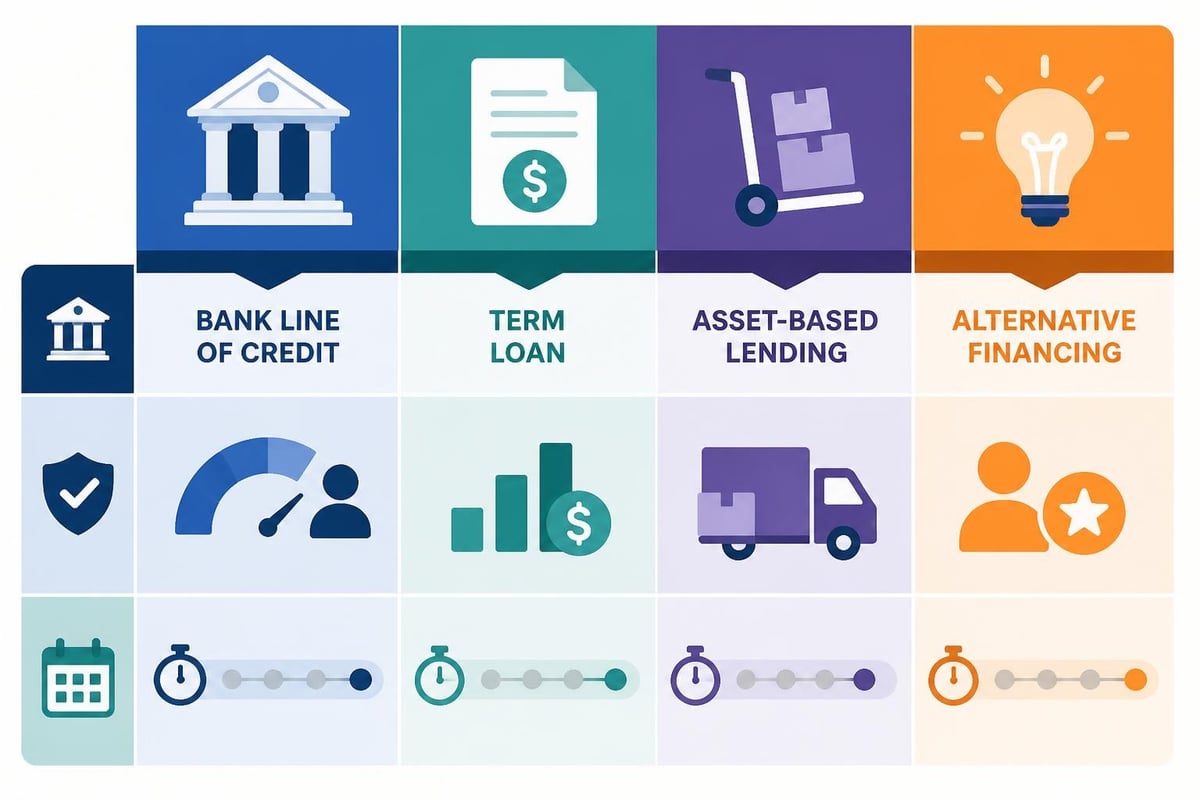
Banks and established financial institutions offer several cash funding products that have served businesses for decades. Lines of credit remain among the most popular options, providing revolving access to funds up to a predetermined limit. Businesses draw on these lines as needed and pay interest only on the outstanding balance.
The advantages and disadvantages of lines of credit include flexibility and lower interest rates compared to term loans, but also require strong creditworthiness and often personal guarantees. These traditional products typically demand:
- Established credit history and financial statements
- Collateral or security interests
- Regular financial reporting and covenant compliance
- Relationship banking arrangements
Term loans represent another conventional cash funding approach, delivering a lump sum with predetermined repayment schedules. While less flexible than credit lines, they offer predictable payment structures that facilitate long-term financial planning.
Alternative Cash Funding Solutions
The financial landscape has evolved dramatically over the past decade, introducing alternative cash funding mechanisms that address gaps in traditional banking. These solutions often prioritize speed and accessibility over the stringent requirements of conventional lenders.
Revenue-based financing ties repayment to a percentage of monthly revenues, creating a natural alignment between funding costs and business performance. During slower periods, payments decrease proportionally, providing breathing room for businesses facing seasonal fluctuations.
Merchant cash advances offer another alternative, particularly for retail and service businesses with consistent credit card transactions. The pros and cons of merchant cash advances highlight their accessibility for businesses with limited credit history, though the effective interest rates can be substantially higher than traditional options.
| Funding Type | Approval Speed | Credit Requirements | Repayment Structure | Best For |
|---|---|---|---|---|
| Bank Line of Credit | 2-6 weeks | Strict | Revolving, interest only | Established businesses |
| Term Loan | 3-8 weeks | Moderate to strict | Fixed monthly payments | Long-term investments |
| Revenue-Based | 1-2 weeks | Moderate | % of monthly revenue | Growth companies |
| Merchant Cash Advance | 1-3 days | Minimal | Daily card sales deduction | High-volume retailers |
Strategic Applications of Cash Funding
Businesses deploy cash funding across numerous scenarios, each requiring careful consideration of timing, cost, and strategic objectives. The most successful implementations align funding mechanisms with specific business needs and growth trajectories.
Working Capital Management
Managing working capital represents perhaps the most common application of cash funding. Businesses face continuous cycles of purchasing inventory, delivering services, and collecting receivables. The lag between these stages creates temporary cash flow gaps that can disrupt operations.
Cash flow loans specifically address these timing mismatches, allowing businesses to maintain smooth operations while waiting for customer payments. Manufacturing companies might use cash funding to purchase raw materials before production cycles complete, while service firms might bridge payroll during projects with extended payment terms.
Effective working capital management through cash funding requires:
- Accurate cash flow forecasting to anticipate funding needs
- Understanding of cash conversion cycles specific to your industry
- Right-sizing funding amounts to avoid over-borrowing
- Matching funding terms to receivable collection periods
The various cash forecasting methods available to businesses range from simple projection models to sophisticated statistical analyses, each offering different levels of precision and resource requirements.
Opportunity Capture
Strategic opportunities rarely arrive on convenient schedules. Whether securing volume discounts from suppliers, acquiring competitor assets, or responding to unexpected market openings, businesses need immediate capital access to capitalize on time-sensitive situations.
Cash funding provides the liquidity necessary to act decisively when opportunities emerge. A distributor might leverage cash funding to purchase excess inventory from a distressed competitor at significant discounts. A service provider could use immediate capital to hire specialized talent before competitors make offers.

These applications demand rapid decision-making processes that balance opportunity returns against funding costs. Businesses must develop frameworks for quickly assessing whether specific opportunities justify the expense and terms of immediate cash funding.
Risk Management and Cash Funding
While cash funding solves immediate liquidity challenges, it introduces financial obligations and risks that require careful management. Understanding these dynamics separates successful cash funding strategies from those that create additional stress on business operations.
Cost Analysis Beyond Interest Rates
The true cost of cash funding extends beyond stated interest rates or factor rates. Origination fees, processing charges, early repayment penalties, and maintenance fees can substantially increase the effective annual percentage rate (APR) businesses actually pay.
Consider a merchant cash advance that advances $50,000 with a $65,000 repayment obligation over six months. While the $15,000 difference might seem like a 30% fee, the effective APR approaches 60% or higher when annualized and compounded. Businesses must calculate total costs accurately to compare options meaningfully.
Additional hidden costs include:
- Administrative burden of compliance and reporting
- Potential covenant restrictions limiting operational flexibility
- Personal guarantee exposure for business owners
- Impact on future borrowing capacity and credit profiles
Matching Funding to Purpose
Strategic risk management requires aligning cash funding terms with their intended purpose. Using short-term, high-cost cash funding for long-term asset purchases creates dangerous mismatches between cash generation and repayment obligations.
The fundamental principle: fund long-term assets with long-term capital, and short-term needs with short-term funding. Equipment purchases spanning five-year useful lives should utilize term loans with comparable durations, not 90-day merchant advances. Conversely, seasonal inventory buildups align perfectly with revolving credit lines that can be repaid as inventory converts to cash.
| Purpose | Appropriate Funding | Duration | Risk Level |
|---|---|---|---|
| Seasonal inventory | Revolving line of credit | 3-6 months | Low |
| Equipment purchase | Term loan | 3-7 years | Low |
| Bridge to receivables | Invoice factoring | 30-90 days | Low |
| Rapid expansion | Revenue-based financing | 1-3 years | Moderate |
| Emergency cash gap | Merchant cash advance | 3-12 months | High |
Lender Readiness and Cash Funding Access
Access to favorable cash funding terms depends heavily on lender readiness-the state of being organizationally and financially prepared to present compelling funding applications. Businesses that proactively maintain lender readiness secure better terms, faster approvals, and more flexible arrangements.
Financial Infrastructure Requirements
Lenders evaluate cash funding applications based on standardized criteria that assess both historical performance and future viability. Businesses must maintain robust financial infrastructure to meet these expectations consistently.
Clean financial statements prepared according to Generally Accepted Accounting Principles (GAAP) form the foundation of lender readiness. Monthly closings, accurate accrual accounting, and reconciled balance sheets demonstrate financial control and credibility. Many businesses discover gaps in their accounting systems only when applying for cash funding, creating delays and potentially unfavorable impressions.
Strong cash flow financing applications require:
- Three years of financial statements (if available)
- Current-year interim statements (no more than 60 days old)
- Detailed accounts receivable and payable aging reports
- Cash flow projections with reasonable assumptions
- Clear explanations of any anomalies or unusual transactions
Documentation and Compliance Standards
Beyond financial statements, lenders require extensive documentation that validates business legitimacy, ownership structure, and operational stability. Businesses should maintain organized repositories of these documents for rapid response to funding opportunities.
The merchant cash advance process, while generally less stringent than traditional banking, still requires basic documentation including bank statements, processing statements, and ownership verification. More sophisticated cash funding arrangements demand corporate resolutions, organizational documents, and detailed business plans.
Governance and Control Considerations
Cash funding introduces external parties with financial interests in business performance. Managing these relationships while maintaining operational control requires clear governance structures and disciplined financial management.
Covenant Management
Many cash funding agreements include financial covenants-specific performance metrics businesses must maintain throughout the funding period. Common covenants include minimum debt service coverage ratios, maximum leverage ratios, and working capital requirements.
Covenant violations can trigger default provisions, accelerate repayment obligations, or increase interest rates. Proactive covenant management involves:
- Monthly covenant calculation and monitoring
- Early warning systems for approaching thresholds
- Communication protocols with lenders about potential issues
- Contingency plans for covenant cure provisions
Businesses should negotiate covenant terms during initial funding discussions rather than accepting standard templates without consideration. Realistic, achievable covenants protect both lender interests and borrower flexibility.

Balancing Multiple Funding Sources
Sophisticated businesses often utilize multiple cash funding sources simultaneously, creating layered capital structures that balance cost, flexibility, and availability. A company might maintain a primary banking relationship for a revolving credit line while utilizing invoice factoring for specific customer accounts and equipment financing for capital purchases.
This diversification provides resilience against individual lender changes and market disruptions. However, it also increases complexity in managing cross-default provisions, intercreditor agreements, and competing lien priorities. Understanding how different cash funding arrangements interact prevents unintended conflicts and maintains clear capital structure governance.
Industry-Specific Cash Funding Considerations
Different industries face unique cash funding challenges based on their operational characteristics, revenue patterns, and asset profiles. Tailoring cash funding strategies to industry dynamics enhances effectiveness and reduces unnecessary costs.
Capital-Intensive Industries
Manufacturing, mining, and industrial operations require substantial working capital to fund raw material purchases, work-in-process inventory, and finished goods before sale completion. These businesses benefit from asset-based lending that uses inventory and receivables as collateral for revolving credit facilities.
The gold industry, for example, faces particular cash funding challenges due to commodity price volatility, long production cycles, and significant capital requirements. Mining operations might secure cash funding against proven reserves, while refiners and fabricators leverage finished inventory and purchase commitments.
Service and Professional Firms
Service businesses typically carry minimal hard assets but face significant cash flow timing gaps between service delivery and payment receipt. Professional services firms, consulting practices, and creative agencies often wait 30-90 days for client payments while managing immediate payroll and overhead obligations.
For these organizations, cash funding mechanisms tied to receivables-such as invoice factoring or accounts receivable financing-provide natural alignment between funding sources and cash generation. The benefits of cash management extend beyond immediate liquidity to include stronger client relationships through flexible payment terms.
Seasonal Businesses
Retail, agriculture, tourism, and other seasonal industries experience dramatic revenue fluctuations throughout the year. These businesses need cash funding that accommodates high borrowing during preparation and low seasons, with rapid repayment during peak revenue periods.
Seasonal credit lines with annual reductions to zero balance, revenue-based repayment structures, and flexible draw schedules align with these patterns. Lenders experienced with seasonal businesses understand these dynamics and structure cash funding accordingly, whereas general lenders might impose inappropriate covenant requirements.
Optimizing Cash Funding Strategy
Developing an optimal cash funding strategy requires integrating multiple considerations into a coherent framework that supports business objectives while managing financial risks appropriately.
Strategic Planning Integration
Cash funding decisions should flow from strategic business planning rather than reactive crisis management. Annual planning processes should identify anticipated funding needs, evaluate potential sources, and establish relationships before capital becomes urgently necessary.
This proactive approach provides several advantages:
- Better terms through competitive evaluation rather than distressed borrowing
- Relationship development that facilitates future funding access
- Strategic flexibility to pursue opportunities without delays
- Risk mitigation through diversified funding sources
Businesses should maintain relationships with multiple potential funding sources even when not actively borrowing, creating options when needs arise.
Continuous Improvement Processes
The most sophisticated cash funding strategies incorporate continuous improvement through regular evaluation of funding costs, terms, and alternatives. Financial markets evolve constantly, introducing new products and competitive dynamics that might benefit existing borrowers.
Annual reviews should assess:
- Current funding costs compared to market alternatives
- Utilization patterns and whether facilities are appropriately sized
- Covenant compliance and whether terms remain appropriate
- Lender relationship quality and responsiveness to business needs
- Emerging alternatives that might improve overall capital structure
These reviews often identify opportunities to refinance expensive cash funding with more favorable alternatives, consolidate multiple sources, or adjust facilities to better match actual usage patterns.
Cash funding provides essential liquidity that enables businesses to maintain operations, capture opportunities, and navigate the inevitable timing mismatches between cash inflows and outflows. Success requires matching funding mechanisms to specific needs, maintaining lender readiness, and managing obligations within robust governance frameworks. AurumCrest Advisory brings over 30 years of experience helping businesses develop comprehensive liquidity strategies, enhance lender readiness, and implement practical governance solutions that strengthen financial resilience while maintaining operational control.