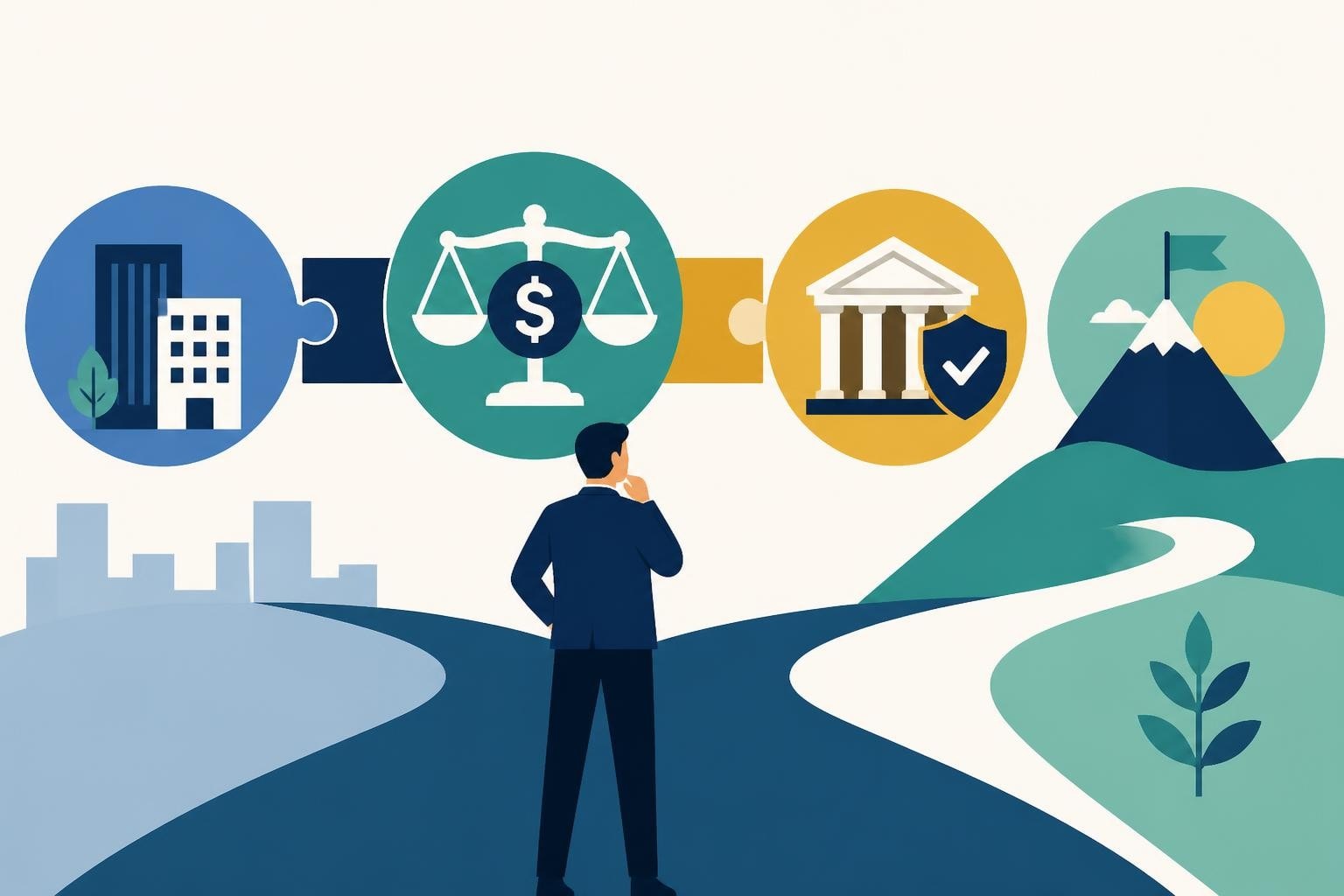
Businesses navigating today's complex financial landscape require access to flexible, strategic financing that aligns with their growth objectives and operational realities. Capital solutions represent a comprehensive approach to corporate finance that goes beyond traditional lending, encompassing tailored financing structures, liability management, and strategic advisory services designed to optimize a company's capital structure. For organizations in industries ranging from gold mining to manufacturing, understanding the full spectrum of available capital solutions can mean the difference between stagnation and sustainable expansion.
Understanding the Capital Solutions Landscape
The term "capital solutions" encompasses a broad range of financing alternatives designed to meet specific business needs. Unlike conventional bank loans with rigid structures, these solutions offer flexibility in terms, collateral requirements, and repayment schedules.
Modern capital solutions address multiple financial challenges simultaneously. Companies may need to refinance existing debt, fund an acquisition, bridge seasonal cash flow gaps, or invest in equipment upgrades. Each scenario demands a different approach, and sophisticated capital solutions providers structure arrangements that align with both immediate needs and long-term strategic objectives.
Key Components of Effective Capital Structures
A well-designed capital structure balances several competing priorities:
- Cost of capital versus flexibility in terms and covenants
- Dilution concerns when considering equity versus debt instruments
- Timing considerations for market conditions and business cycles
- Risk allocation between the company and capital providers
- Governance implications that may affect operational control
The gold industry presents unique capital requirements due to commodity price volatility, long development timelines, and specialized asset bases. Companies in this sector benefit from advisors who understand both general corporate finance principles and industry-specific challenges when evaluating financing options.
Private Debt and Alternative Lending Strategies
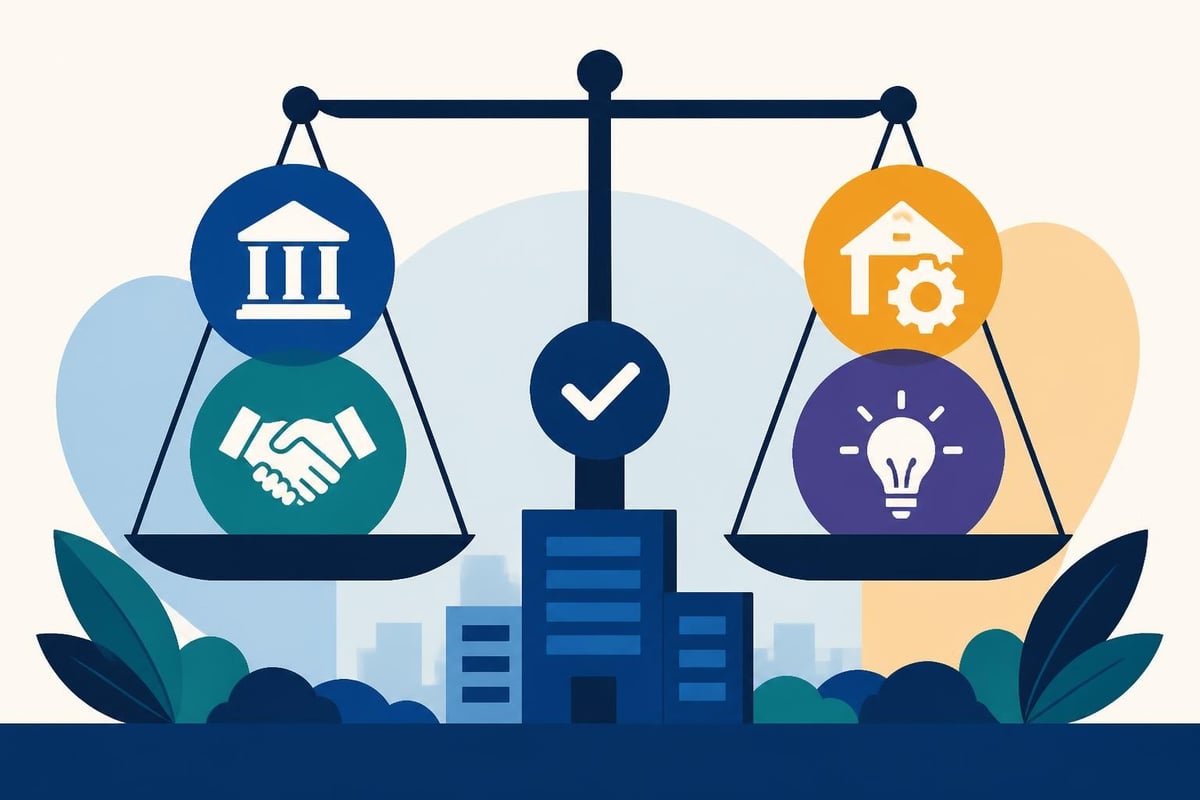
Traditional bank lending has become increasingly restrictive since the financial crisis, creating opportunities for alternative capital providers. Private credit markets have expanded significantly, offering customized financing solutions that banks cannot or will not provide.
Asset-Based Lending Approaches
Asset-based lending (ABL) facilities provide capital secured by specific company assets such as inventory, receivables, equipment, or real estate. This structure often enables higher advance rates than traditional term loans because lenders can monitor collateral values closely.
| Financing Type | Typical Advance Rate | Primary Collateral | Best For |
|---|---|---|---|
| Receivables Financing | 75-90% | Accounts receivable | Companies with strong customer bases |
| Inventory Lending | 50-75% | Raw materials, finished goods | Manufacturing, distribution |
| Equipment Financing | 70-85% | Machinery, vehicles | Capital-intensive operations |
| Real Estate ABL | 65-80% | Commercial property | Property owners needing liquidity |
Private credit providers like Barings specialize in these structures, often combining multiple asset classes within a single facility. This approach maximizes available capital while maintaining financial flexibility for the borrower.
The advantage of ABL structures lies in their responsiveness to business growth. As receivables and inventory increase with sales expansion, available borrowing capacity grows proportionally. This creates a self-reinforcing cycle that supports sustainable growth without requiring repeated financing negotiations.
Structuring Solutions for Complex Situations
Not all capital needs fit conventional categories. Companies facing operational challenges, ownership transitions, or industry disruptions require bespoke financing arrangements that address their specific circumstances.
Liability Management and Restructuring
Liability management encompasses strategies to optimize existing debt obligations. This may involve refinancing at more favorable terms, extending maturities to improve cash flow, or negotiating covenant modifications to provide operational breathing room.
Strategic capital solutions in this context require deep understanding of lender motivations, market conditions, and legal frameworks. Successful restructuring preserves value for all stakeholders while positioning the company for improved performance.
For businesses experiencing temporary setbacks, proactive liability management prevents minor issues from escalating into existential threats. Early engagement with lenders, supported by credible financial projections and operational improvement plans, typically yields better outcomes than crisis-driven negotiations.
The gold industry particularly benefits from these approaches given commodity price volatility. Companies may find themselves over-leveraged during price downturns even with sound operational fundamentals. Thoughtful restructuring preserves productive assets and relationships while providing time for market conditions to normalize.
Lender Readiness and Relationship Management
Accessing capital solutions on favorable terms requires more than immediate need. Companies that maintain "lender readiness" position themselves to capitalize on opportunities and weather challenges more effectively.
Building Financial Infrastructure
Lenders evaluate potential borrowers across multiple dimensions beyond financial statements:
- Financial reporting quality - Timely, accurate, and transparent reporting systems
- Internal controls - Documented processes that ensure data integrity
- Management depth - Experienced teams with track records of execution
- Strategic planning - Clear articulation of business strategy and market positioning
- Risk management - Identification and mitigation of key business risks
Companies that invest in these foundational elements before seeking capital solutions negotiate from positions of strength. They can demonstrate operational competence and financial discipline that justify better pricing and more flexible terms.

Understanding risk management frameworks also helps companies identify and address potential lender concerns before they arise. This proactive approach accelerates transaction timelines and reduces execution risk.
Integration with Working Capital Management
Capital solutions deliver maximum value when integrated with broader working capital optimization strategies. The relationship between structural financing and operational cash management determines overall financial performance.
Cash Conversion Cycle Optimization
The cash conversion cycle measures how quickly a company converts investments in inventory and receivables back into cash. Shorter cycles reduce capital requirements and improve returns on invested capital.
Effective capital solutions consider this dynamic. For example, a receivables financing facility might be paired with incentive programs that encourage faster customer payment. Similarly, inventory financing could support just-in-time procurement strategies that reduce carrying costs.
These integrated approaches require coordination between finance, operations, and sales functions. Companies that break down functional silos and align incentives around working capital efficiency achieve better results than those treating financing as purely a financial department responsibility.
Gold industry participants face unique working capital challenges due to long production cycles and commodity price risk. Strategic capital solutions in this context often include hedging components that stabilize cash flows and reduce financing costs by lowering lender risk perceptions.
Market Dislocation and Opportunistic Strategies
Periods of market stress create both challenges and opportunities for companies with access to flexible capital solutions. Disruptions in credit markets, industry downturns, or regulatory changes can temporarily disconnect asset values from fundamental worth.
Special Situations Financing
Special situations financing addresses circumstances that don't fit standard underwriting criteria. This might include bridge financing for companies in transition, rescue capital for distressed but viable businesses, or growth capital for unconventional business models.
Providers specializing in these situations, such as Wall Street Access, bring deep expertise in evaluating risk-return profiles that traditional lenders avoid. Their capital solutions often involve higher costs but provide access to financing when alternatives don't exist.
For borrowers, these arrangements require clear-eyed assessment of costs versus benefits. The appropriate question isn't whether rates are high in absolute terms, but whether the capital enables value creation that exceeds its cost. Sometimes expensive capital proves far less costly than no capital.
The gold sector experiences periodic dislocation as commodity prices fluctuate and investor sentiment shifts. Companies maintaining relationships with diverse capital providers can access funding throughout market cycles rather than only during favorable periods.
Technology and Data in Capital Solutions
Financial technology increasingly influences how capital solutions are structured, priced, and monitored. Data analytics enable more precise risk assessment and dynamic pricing models that benefit both lenders and borrowers.
Analytics-Driven Underwriting
Modern capital providers leverage real-time data to monitor borrower performance continuously. This might include point-of-sale data, supply chain visibility, or production metrics that provide early warning of developing issues.
This transparency benefits borrowers through potentially lower costs and greater flexibility. When lenders maintain confidence through ongoing visibility, they can be more accommodating during temporary challenges. The relationship shifts from periodic evaluation to continuous partnership.
However, data-driven approaches also raise questions about reliability and interpretation. Recent research on evaluating analytical outputs in capital markets highlights the importance of understanding model limitations and maintaining human judgment in decision-making processes.
| Technology | Application | Borrower Benefit |
|---|---|---|
| Real-time reporting | Continuous covenant monitoring | Faster problem resolution |
| Predictive analytics | Cash flow forecasting | Proactive capital planning |
| Automated collateral tracking | Asset-based lending | Higher advance rates |
| Blockchain verification | Supply chain finance | Reduced documentation burden |
Companies that invest in financial systems infrastructure position themselves to access these advanced capital solutions. The initial investment in technology pays dividends through better financing terms and stronger lender relationships over time.
Strategic Advisory in Capital Formation
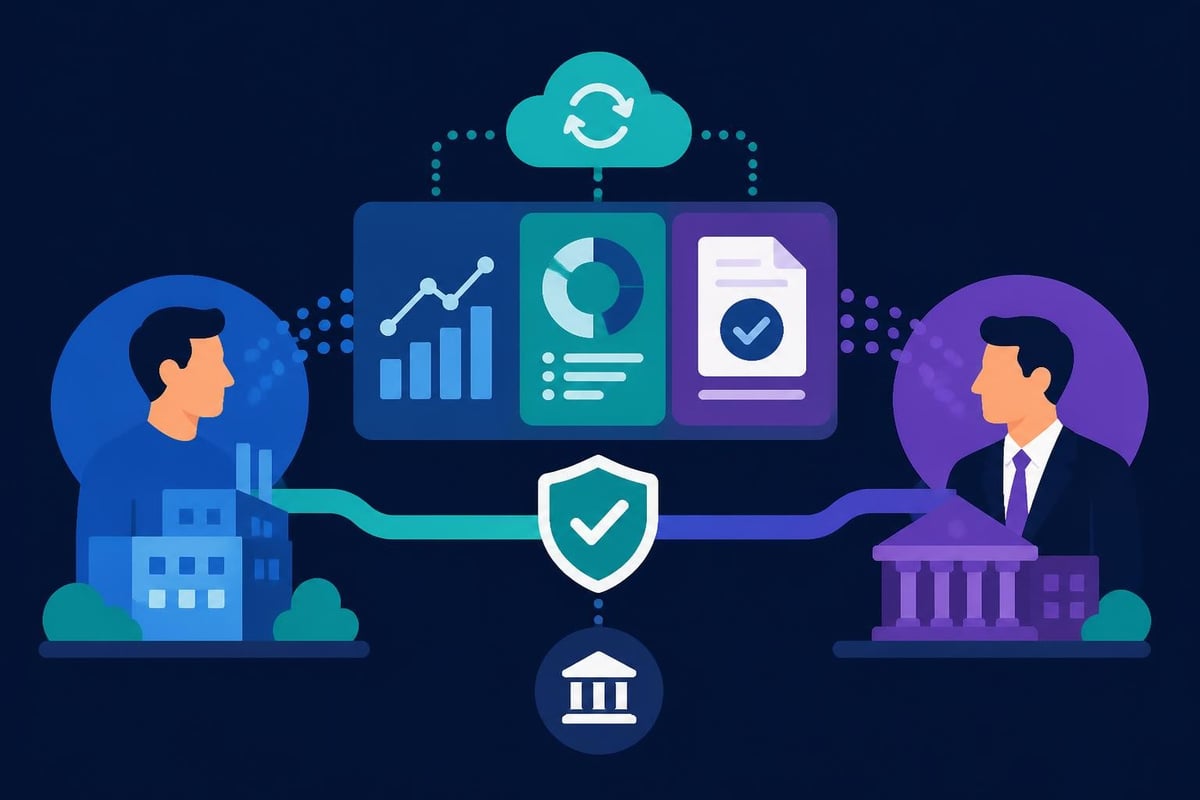
Securing capital solutions involves more than identifying willing lenders. The structuring process requires strategic thinking about timing, negotiation leverage, and alignment with long-term business objectives.
Choosing the Right Capital Partners
Not all capital providers suit every situation. Key selection criteria include:
- Industry expertise relevant to the borrower's sector
- Transaction experience with similar deal structures
- Capital availability to fund current and anticipated future needs
- Relationship approach emphasizing partnership versus pure transaction focus
- Flexibility in addressing unique circumstances or changing conditions
Organizations like Goldman Sachs' Capital Solutions Group offer comprehensive platforms spanning multiple capital types, while boutique firms like DOL Capital Solutions provide specialized expertise in specific sectors or transaction types.
The decision between generalist and specialist providers depends on company circumstances. Complex situations often benefit from specialists who understand nuanced challenges, while straightforward financing needs may be efficiently met through established platforms with competitive pricing.
Governance and Control Considerations
Capital solutions inevitably involve some sharing of information, decision rights, or proceeds with external parties. Understanding and negotiating these governance elements protects shareholder value while accessing needed capital.
Covenant Structures and Operational Flexibility
Financial covenants establish boundaries within which borrowers must operate. Well-designed covenants protect lender interests without unnecessarily constraining business operations.
Common covenant types include:
- Maintenance covenants requiring ongoing compliance with financial ratios
- Incurrence covenants limiting certain actions unless conditions are met
- Reporting requirements mandating information delivery on specified schedules
- Negative covenants restricting activities without lender consent
Experienced advisors negotiate covenant packages that provide operational flexibility while maintaining lender comfort. This might involve tiered structures that adjust with performance levels or customized definitions that reflect business model specifics.
The relationship between financing structure and business strategy demands careful attention. Capital solutions that seem attractive in isolation may prove constraining when integrated with operational realities. Advisory support from firms with practical execution experience helps companies avoid these pitfalls.
Industry-Specific Capital Challenges
Different industries face distinct capital requirements based on their asset bases, cash flow characteristics, and risk profiles. Effective capital solutions address these sector-specific considerations.
Gold Industry Capital Dynamics
Gold mining and exploration companies contend with unique financing challenges. Long development timelines, commodity price volatility, jurisdictional risks, and specialized assets require capital providers who understand these dynamics.
Traditional lenders often struggle with gold sector financing due to these complexities. Specialized capital solutions address these gaps through structures like:
- Streaming arrangements providing upfront capital in exchange for future production at fixed prices
- Royalty financing creating revenue-sharing mechanisms that align investor and operator interests
- Project finance segregating specific assets with ring-fenced cash flows
- Convertible instruments allowing lenders to participate in commodity price upside
These alternatives demonstrate how capital solutions evolve to meet industry-specific needs that conventional financing cannot address. Companies benefit from advisors who understand both general finance principles and sector-specific requirements when structuring these arrangements.
Risk Assessment and Mitigation Strategies
All capital solutions involve risk trade-offs. Understanding and appropriately managing these risks determines whether financing arrangements support or undermine business objectives.
Comprehensive Risk Frameworks
Effective risk management in capital formation encompasses multiple dimensions:
- Interest rate risk from variable-rate structures or refinancing requirements
- Commodity price risk affecting revenue stability and debt service capacity
- Operational risk that could impair asset values or cash generation
- Counterparty risk if capital providers face their own financial challenges
- Regulatory risk from changing legal or compliance requirements
Companies that develop comprehensive risk assessment capabilities make better-informed capital decisions. This involves stress-testing financing structures against adverse scenarios and maintaining contingency plans for various outcomes.
The intersection of risk management and capital structure planning creates opportunities for value creation. Sometimes accepting slightly higher financing costs eliminates risks that could prove far more expensive if they materialize. The appropriate framework evaluates total economic impact rather than focusing narrowly on interest rates.
Building Long-Term Financial Resilience
The ultimate objective of capital solutions extends beyond solving immediate financing needs. Strategic capital formation builds institutional capabilities and relationships that strengthen companies over time.
Creating Sustainable Capital Access
Companies that treat capital solutions as episodic transactions miss opportunities to develop sustainable competitive advantages. Alternative approaches include:
- Maintaining relationships with multiple capital providers across market cycles
- Investing in financial infrastructure that supports efficient capital access
- Developing reputation for transparency and operational excellence
- Building management capabilities in financial strategy and negotiation
- Aligning capital structure with long-term strategic objectives
This long-term perspective particularly benefits companies in cyclical industries. Relationships established during favorable periods provide access to capital during downturns when it's most valuable. Similarly, infrastructure investments made when capital is available reduce execution risk during challenging times.
The concept of lender readiness extends beyond immediate transaction preparation to ongoing organizational development. Companies that embed these principles into their operational frameworks position themselves for sustained success regardless of market conditions.
Strategic capital formation requires balancing immediate financing needs with long-term business objectives while navigating complex markets and relationship dynamics. Success demands technical expertise, industry knowledge, and practical execution capabilities that many organizations lack internally. AurumCrest Advisory brings over 30 years of experience helping companies optimize their capital structures, strengthen lender relationships, and build the financial resilience necessary for sustainable growth. Whether you're exploring financing alternatives, preparing for capital raises, or seeking to enhance your organization's financial infrastructure, our team provides the strategic thinking and practical support to achieve your objectives.